
DuoPlus Cloud Phone vs Hidemium vs VMOS Cloud: 2026 Comparison
Compare DuoPlus Cloud Phone, Hidemium, and VMOS Cloud for multi-account management. See which fits real Android cloud phones, anti-detect browsing, or automation.
DuoPlus Cloud Phone vs Hidemium vs VMOS Cloud: Which Multi-Account Tool Fits Your Workflow?
Choosing between a cloud phone platform and an anti-detect browser is one of the most consequential decisions for teams running multi-account operations. DuoPlus Cloud Phone, Hidemium, and VMOS Cloud all promise to keep accounts isolated and safe from bans, but they solve the problem in fundamentally different ways. This comparison breaks down where each tool excels, where they fall short, and which one matches specific use cases.
How the Three Tools Differ at a Glance
DuoPlus Cloud Phone vs Hidemium vs VMOS Cloud: 2026 Comparison - How the Three Tools Differ at a Glance.
The core distinction comes down to what each product actually runs. DuoPlus Cloud Phone and VMOS Cloud are cloud phone platforms: they host real Android devices in remote data centers, so every account operates inside a genuine mobile operating system. Hidemium is an anti-detect browser: it runs on your local computer and creates isolated browser profiles that spoof fingerprints.
This difference matters more than any feature list. Social media platforms treat mobile app traffic differently from desktop browser traffic. If your accounts primarily live inside mobile apps like TikTok, Instagram, or Telegram, a cloud phone gives you the actual Android environment those apps expect. If your work happens in web dashboards, ad managers, or browser-based storefronts, an anti-detect browser may be all you need.
| Criteria | DuoPlus Cloud Phone | Hidemium | VMOS Cloud |
|---|---|---|---|
| Core technology | ARM-based Android 15 cloud phones | Anti-detect browser profiles | Android cloud phone virtualization |
| Environment type | Real mobile OS per account | Isolated browser profile per account | Virtual Android device per account |
| Primary strength | App-native multi-account management | Fast, lightweight browser profiling | Automation and batch control |
| Billing model | Per cloud phone instance | Subscription plans with free tier | Pay-per-minute plus permanent options |
| Best for | TikTok, Instagram, Telegram app matrices | Facebook ads, e-commerce dashboards, scraping | Crypto airdrops, app testing, social automation |
DuoPlus Cloud Phone: Built for App-Native Account Matrices
DuoPlus Cloud Phone vs Hidemium vs VMOS Cloud: 2026 Comparison - DuoPlus Cloud Phone: Built for App-Native Account Matrices.
DuoPlus Cloud Phone positions itself as the world's first Android 15 anti-detect cloud phone platform. Each instance is a real ARM-based virtual Android device with an independent fingerprint, simulated GPS location, dedicated SIM data, and proxy IP. That means every account appears to run on a separate physical phone in a different location.
Where DuoPlus Has a Clear Advantage
Real Android app compatibility. Because DuoPlus runs actual Android 15 environments, mobile apps install and behave exactly as they would on a local device. For TikTok matrix marketing, YouTube channel management, or Telegram growth, this removes the browser fingerprint mismatch that can trigger platform suspicion.
One-click reskin for account rotation. When an account needs a fresh identity, DuoPlus refreshes all device parameters instantly. This is faster than manually rebuilding browser profiles and more thorough than simply swapping a proxy.
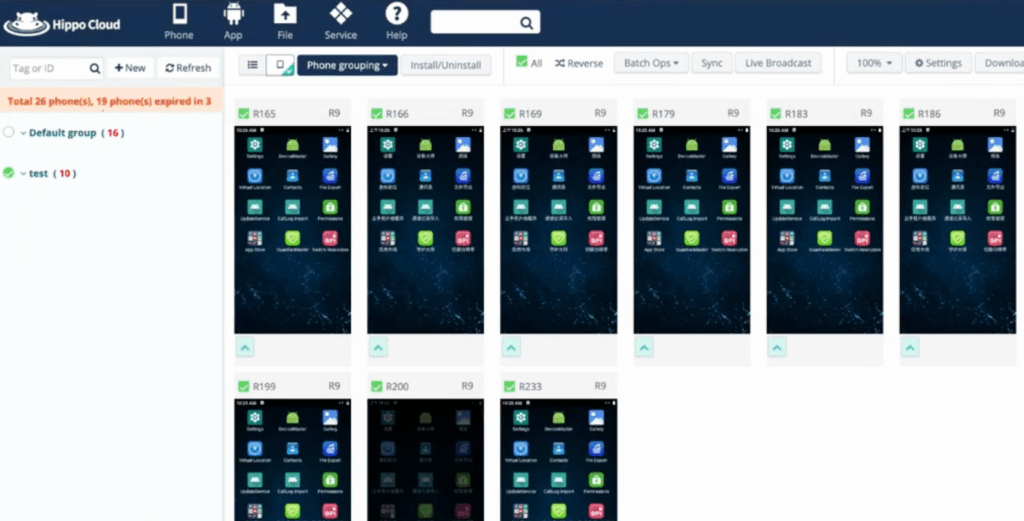
Unified team dashboard. Multiple operators can control hundreds of cloud phones from a single browser-based interface, which simplifies delegation and oversight for agencies.
Integrated DUO+ AI Agent. Natural-language commands can automate app actions like posting, commenting, or following without writing scripts. This is useful for teams that want automation without hiring developers.
Where DuoPlus Is Not the Best Fit
If your operation is entirely browser-based, DuoPlus is likely overkill. Running a full Android device for each Facebook Business Manager login or Amazon Seller Central session costs more than a lightweight browser profile. DuoPlus also requires a learning curve for teams accustomed to desktop browser workflows.
Hidemium: The Lightweight Anti-Detect Browser for Web Workflows

DuoPlus Cloud Phone vs Hidemium vs VMOS Cloud: 2026 Comparison - Hidemium: The Lightweight Anti-Detect Browser for Web Workflows.
Hidemium takes a different approach. Instead of emulating an entire phone, it creates isolated browser profiles on your existing computer. Each profile gets a unique digital fingerprint covering WebGL, WebRTC, fonts, canvas, and other browser signals, plus optional proxy integration.
Hidemium's Credible Strengths
Speed and cost efficiency. Browser profiles launch instantly and consume far fewer resources than cloud phone instances. For teams managing dozens of Facebook ad accounts or e-commerce storefronts, this translates to lower costs and faster iteration. Hidemium also offers a free plan, which lowers the barrier for solo operators.
Strong fingerprint spoofing. Hidemium's profile isolation covers the browser signals that matter most for web-based platforms. It prevents WebRTC leaks and masks the real IP, which addresses the most common causes of browser-based account association.
No-code automation with AI Node. Hidemium's drag-and-drop automation builder lets users create browser task flows without programming. The AI Node accepts natural-language instructions, making it accessible for marketers who need repetitive web actions automated.
Team collaboration and campaign management. Bulk profile creation, cookie import/export, and shared workspaces make Hidemium practical for agencies running client campaigns.
Hidemium's Limitations
Hidemium cannot run mobile apps. If your accounts are app-native, browser profiles will not replicate the mobile environment platforms expect. Some platforms also fingerprint mobile app traffic differently from browser traffic, so Hidemium alone may not protect app-based account matrices.
VMOS Cloud: Automation-First Cloud Phones with Flexible Billing
VMOS Cloud sits closer to DuoPlus in technology but differentiates itself through automation depth and pricing flexibility. It provides cloud-based Android virtualization with unique device fingerprints, Google CTS certification, and global proxy support.
VMOS Cloud's Credible Strengths
Pay-per-minute billing. VMOS Cloud's usage-based pricing appeals to teams with fluctuating workloads. You only pay for the time your cloud phones are active, which can be more economical than fixed per-instance subscriptions for short campaigns or testing sprints.
SyncMaster batch control. VMOS Cloud's SyncMaster feature lets operators control multiple virtual devices simultaneously. For tasks like mass app installation, synchronized scrolling, or coordinated actions across accounts, this batch capability saves significant manual effort.
AI-driven social automation. Built-in automation handles scrolling, liking, and commenting tasks. For crypto airdrop farmers and social media marketers who need accounts to appear active, this hands-off engagement automation is a core selling point.
Google CTS certification. This certification signals that VMOS Cloud devices pass Google's compatibility tests, which can matter for apps that check device integrity.
VMOS Cloud's Limitations
VMOS Cloud's automation focus means it may offer less granular control over individual device parameters compared to a platform built specifically for anti-detection. Teams that need deep fingerprint customization per account may find the options more limited. The pay-per-minute model can also become expensive for always-on account matrices.
Head-to-Head: Key Comparison Criteria
Multi-Account Isolation
All three tools isolate accounts, but the isolation method differs. DuoPlus Cloud Phone and VMOS Cloud isolate at the device level, giving each account its own Android environment. Hidemium isolates at the browser profile level. For app-based platforms, device-level isolation is stronger because it matches the environment the platform expects. For browser-based platforms, Hidemium's profile isolation is sufficient and more efficient.
Automation Capabilities
VMOS Cloud leads in batch automation with SyncMaster and AI-driven engagement tasks. DuoPlus offers natural-language automation through its DUO+ AI Agent, focused on app interactions. Hidemium provides no-code browser automation through its AI Node. The right choice depends on whether you automate mobile apps or web workflows.
Team Collaboration
All three support team sharing, but the models differ. DuoPlus centralizes cloud phone control in a unified dashboard accessible from any browser. Hidemium offers profile sharing and campaign management for browser-based teams. VMOS Cloud provides role-based permissions for its cloud phone fleet. Teams should evaluate which collaboration model matches their operational structure.
Pricing Flexibility
Hidemium offers a free plan and subscription tiers, making it the lowest-cost entry point. VMOS Cloud's pay-per-minute model suits variable workloads. DuoPlus uses a per-instance model that scales predictably for always-on account matrices. Budget-conscious teams should calculate total cost based on expected concurrent accounts and usage hours.
Decision Guide: Which Tool Should You Choose?
Choose DuoPlus Cloud Phone if:
- Your accounts live primarily in mobile apps like TikTok, Instagram, Telegram, or Zalo
- You need real Android 15 environments with dedicated SIM data and GPS simulation
- You want one-click identity reskinning for fast account rotation
- Your team manages hundreds of app-based accounts from a central dashboard
Choose Hidemium if:
- Your work happens in web dashboards, ad managers, or browser-based storefronts
- You need a lightweight, cost-effective solution for Facebook ads or e-commerce
- You want to start with a free plan before committing
- Your automation needs are browser-based, not app-based
Choose VMOS Cloud if:
- You need batch control across many devices simultaneously
- Your workload fluctuates and pay-per-minute billing saves money
- You run crypto airdrop farming or app testing campaigns
- AI-driven social engagement automation is a priority
For a deeper look at how DuoPlus compares with other cloud phone and anti-detect browser options, see our DuoPlus Cloud Phone vs VMOS Cloud vs BlueGenie Cloud Phone comparison and our DuoPlus Cloud Phone vs GeeLark vs Kameleo review.
Practical Example: Scaling a TikTok Matrix
Imagine a cross-border e-commerce team running 50 TikTok accounts to promote products in three regions. Here's how each tool would handle it:
With DuoPlus Cloud Phone, the team purchases 50 cloud phone instances, each with a unique fingerprint, regional GPS, and dedicated IP. Operators assign accounts to team members through the dashboard. When an account needs a fresh identity, one-click reskin refreshes all parameters. The DUO+ AI Agent automates posting schedules across accounts.
With Hidemium, the team creates 50 browser profiles with spoofed fingerprints and proxies. This works for TikTok's web interface, but the mobile app experience is missing. If TikTok's algorithm favors app-native activity, engagement may suffer.
With VMOS Cloud, the team spins up 50 virtual Android devices and uses SyncMaster to batch-install TikTok. AI automation handles scrolling and liking to keep accounts active. Pay-per-minute billing means costs scale with actual usage.
For app-native platforms like TikTok, the cloud phone approach—whether DuoPlus or VMOS Cloud—generally outperforms browser-only solutions. The choice between DuoPlus and VMOS Cloud then comes down to automation depth versus anti-detection granularity.
Related reading
- DuoPlus Cloud Phone vs GeeLark vs BitBrowser: 2026 Comparison - Compare DuoPlus Cloud Phone, GeeLark, and BitBrowser for multi-account management. See which fits real Android cloud phones, RPA automation, or anti-detect browsing.
Sources and further reading
- Global Partnerships - IPWeb Ecosystem Network - IPWeb partners with e-commerce, browsers & payment platforms. Together we build a secure proxy ecosystem to empower your global business growth.
- Our partners | SX.ORG - Information about our partners
- BestProxy Blog - Proxy Tech Insights and Industry Trends - The BestProxy Blog provides the latest insights into Proxy Technologies, Industry Trends, and Market Developments. Our Blog helps you stay informed about the newest proxy innovations and offers practical tips and case studies on how to maximize the use of proxies.
Frequently Asked Questions
What is the main difference between a cloud phone and an anti-detect browser?
A cloud phone hosts a real Android operating system on remote hardware, so accounts run inside actual mobile apps. An anti-detect browser creates isolated browser profiles on your local computer and spoofs browser fingerprints. Cloud phones are better for app-native platforms; anti-detect browsers are better for web-based platforms.
Can Hidemium run mobile apps like TikTok or Instagram?
No. Hidemium is a browser-based tool. It can access the web versions of these platforms, but it cannot run the native mobile apps. For app-native account management, a cloud phone platform like DuoPlus Cloud Phone or VMOS Cloud is required.
Which tool is most cost-effective for a small team?
Hidemium is the most cost-effective for browser-based work, thanks to its free plan and low-cost subscriptions. For app-based work, VMOS Cloud's pay-per-minute billing can be cheaper for short or intermittent campaigns, while DuoPlus Cloud Phone's per-instance pricing is predictable for always-on operations.
Does VMOS Cloud offer the same anti-detection level as DuoPlus Cloud Phone?
Both provide unique device fingerprints and anti-detection technology, but they emphasize different areas. VMOS Cloud focuses on Google CTS certification and batch automation. DuoPlus Cloud Phone emphasizes Android 15 environments with dedicated SIM data, GPS simulation, and one-click reskinning. The right choice depends on whether you prioritize automation depth or per-device identity control.
Can I use these tools together?
Yes. Many teams combine an anti-detect browser for web-based ad management with a cloud phone platform for app-native account activity. For example, you might use Hidemium for Facebook Ads Manager profiles while running TikTok accounts on DuoPlus Cloud Phone or VMOS Cloud. This hybrid approach covers both browser and mobile app environments.
Conclusion
DuoPlus Cloud Phone, Hidemium, and VMOS Cloud each solve multi-account management from a different angle. Hidemium excels at lightweight, cost-effective browser profiling for web-based platforms. VMOS Cloud leads in batch automation and flexible pay-per-minute billing for cloud phone fleets. DuoPlus Cloud Phone stands out for app-native account matrices that demand real Android 15 environments, dedicated device identities, and fast account rotation.
The right choice depends on where your accounts live. If they live in mobile apps, choose a cloud phone platform. If they live in browsers, an anti-detect browser may be all you need. For teams managing both, a hybrid approach often delivers the best coverage. For more comparisons across cloud phone and anti-detect browser options, explore our DuoPlus Cloud Phone vs AdsPower vs MoreLogin comparison and DuoPlus Cloud Phone vs BitBrowser vs Nstbrowser review.