
Top 10 AI Workflow Platforms in 2026 (Ranked & Reviewed)
Compare 2026's top AI workflow automation tools—n8n, Zapier, Make, Relevance AI & more—ranked by real-world testing, pricing, and enterprise readiness.
Top 10 AI Workflow Platforms in 2026 (Ranked & Reviewed)
AI workflow automation has moved from a nice-to-have to an operational backbone. By 2026, platforms embed LLMs directly into logic branches, enabling systems that reason, adapt, and execute complex multi-step processes without constant babysitting. The promise is huge—but so is the risk of picking the wrong tool for your team’s skills, scale, and security needs.
We tested and benchmarked the leading platforms against real-world workflows: lead qualification, support triage, content pipelines, and autonomous agent tasks. Every tool on this list has been evaluated on six criteria: customization & flexibility, AI capability depth, integration breadth, ease of use, scalability & security, and pricing transparency. Whether you’re a solo developer or a compliance-heavy enterprise, this ranking will help you find the right AI automation engine.
How We Evaluated the Best AI Workflow Platforms

Top 10 AI Workflow Platforms in 2026 (Ranked & Reviewed) product interface and feature overview.
We didn’t rely on marketing copy. Each platform was stress‑tested with the same four automations and scored on:
- Customization & Flexibility – Can you fall back to custom code (JavaScript, Python) when visual blocks hit a wall? Are multi‑step branching and error handling truly robust?
- AI Capability Depth – Does the platform natively support multiple LLMs, reasoning loops, and AI agents? Can you swap models without rebuilding the whole workflow?
- Integration Breadth – Number and quality of pre‑built connectors, plus the ability to call any API. We looked at how easily you can plug into CRMs, databases, and internal tools.
- Ease of Use – Time from sign‑up to a working, production‑ready automation for both non‑technical ops and developers.
- Scalability & Security – Governance, RBAC, SOC 2 compliance, secret management, and whether the platform can handle 10, 000+ runs/month without breaking the bank.
- Pricing Value – Real cost at scale, not just entry‑level monthly fees.
These criteria surfaced 10 platforms that genuinely belong to the AI workflow automation category. Let’s dive in.
1. n8n – Best for Technical Teams and High-Volume Automation

Top 10 AI Workflow Platforms in 2026 (Ranked & Reviewed) product interface and feature overview.
n8n is the undiputed technical leader in 2026. With 196, 574 GitHub stars, a 200k‑strong community, and SOC 2 compliance, it’s the go‑to for teams that want full control over their AI automations.
- Standout AI Features: Native LangChain support, visual builder with JavaScript/Python code nodes, human‑in‑the‑loop guardrails, multi‑agent setups, and retrieval‑augmented generation (RAG) pipelines.
- Integrations: 500+ built‑in nodes plus the ability to call any REST API. Community templates exceed 4, 000.
- Scalability: Self‑host for ≈$5/month on a small VPS (unlimited runs) or use n8n Cloud starting at $20/month. The pricing model is step‑count based, not execution‑volume based, making it incredibly cost‑effective at scale.
- Who It’s For: DevOps, SecOps, and growth engineers who want to build complex AI agents and automate infrastructure without black‑box limitations.
Real‑World Example: A SaaS team built a lead qualification agent that ingests form submissions, enriches company data via Clearbit, runs a GPT‑4o reasoning step to score intent, and then either creates a CRM deal or sends a personalized Slack alert—all with complete traceability .
2. Zapier – Best for Non‑Technical Operators and Rapid Prototyping

Top 10 AI Workflow Platforms in 2026 (Ranked & Reviewed) product interface and feature overview.
Zapier remains the fastest path from idea to live automation. Its 2026 overhaul added an AI Orchestrator and 200+ one‑click AI Actions, making it a serious player for teams that live in dozens of SaaS tools.
- Standout AI Features: Built‑in ChatGPT, Claude, and Perplexity steps; AI Copilot for building Zaps; and MCP integration.
- Integrations: 8, 000+—the largest library on this list.
- Scalability: Free tier available; Pro plan at $19.99/month. Pricing scales by task volume, so costs can rise quickly for high‑volume AI workflows.
- Who It’s For: Marketing, sales, and support teams that need to glue together tools like Gmail, Slack, and HubSpot without writing a line of code.
Real‑World Example: A content team automated a journalist‑response pipeline: Gmail watches for HARO queries, AI extracts the topic and suggests a personalized answer drawn from existing blog posts, then saves a draft in Google Docs .
3. Make – Best for Visual Scenario Builders and Data Transformation
Make shines when you need to visually map intricate data flows. Its drag‑and‑drop canvas handles parallel branching, merges, and error routing far better than linear builders.
- Standout AI Features: Direct modules for GPT‑4o, Claude, and Gemini; AI‑driven data parsing; and a powerful visual execution logger.
- Integrations: 2, 000+ native apps, plus HTTP modules for custom APIs.
- Scalability: Free tier; Core plan at $9/month. Costs are tied to operations, not time, so complex multi‑step workflows can be economical.
- Who It’s For: Operations teams that need to transform large batches of data between apps—think invoice processing or multi‑source inventory syncs.
4. Microsoft Power Automate – Best for M365‑centric Enterprises
If your organization runs on Microsoft 365, Power Automate is the native choice. AI Builder and Copilot integration mean you can inject AI into approvals, document processing, and SharePoint workflows without leaving the ecosystem.
- Standout AI Features: Pre‑built AI models for form processing and sentiment analysis; Copilot for natural‑language flow creation.
- Integrations: Deep ties to Dynamics 365, Teams, SharePoint, and the wider Microsoft stack, plus 1, 000+ connectors.
- Scalability: Per‑user plans with premium AI features on a pay‑as‑you‑go model. Enterprise governance through Azure AD and Purview.
- Who It’s For: Large enterprises already committed to Microsoft that want to automate internal processes like expense approvals or contract review.
5. UiPath – Best for Enterprise RPA + AI Agent Orchestration
UiPath has evolved from robotic process automation (RPA) to a full intelligent automation suite. Its AI Center and agentic workflow capabilities make it a heavyweight for businesses automating legacy systems alongside modern AI decisions.
- Standout AI Features: Process mining, document understanding, AI agents, and a library of pre‑built automation components.
- Integrations: Massive connector library for SAP, Oracle, Salesforce, and custom legacy apps.
- Scalability: Enterprise‑grade security with RBAC, audit logs, and compliance certifications. Pricing is quote‑based, making it less accessible for small teams.
- Who It’s For: Large banks, insurers, and manufacturers that need to automate high‑volume, stable processes with AI‑driven decision layers.
6. Relevance AI – Best for Autonomous AI Agent Workforces
Relevance AI is built from the ground up for multi‑agent orchestration. You can create a “team” of specialized agents—a researcher, a sales rep, a data analyst—that hand off tasks and tools seamlessly.
- Standout AI Features: Multi‑agent hand‑off, tool calling with browsing and API integration, and a visual agent builder.
- Integrations: Connects to CRMs, databases, and over 50 SaaS tools out of the box, with webhooks for custom endpoints.
- Scalability: Starts at $19/month, scaling by credits. Teams running content and outreach automations see high output per dollar .
- Who It’s For: Growth teams that want an autonomous AI workforce for lead research, personalized email outreach, and data enrichment.
7. Gumloop – Best for Simple No‑Code AI Workflows
Gumloop lowers the barrier to AI automation with a large template library and MCP support. It’s ideal for individuals or small teams that want drop‑in AI actions without learning a complex builder.
- Standout AI Features: Ready‑to‑use AI templates for summarization, translation, and data extraction; MCP protocol for connecting custom tools.
- Integrations: Focused on popular apps like Notion, Airtable, and Gmail.
- Scalability: Free tier; Solo plan at $30/month. Works well for sub‑1, 000 runs/month.
- Who It’s For: Freelancers and tiny teams who need quick, repeatable AI steps inside lightweight business processes.
8. Lindy.ai – Best for Plug‑and‑Play AI Employees
Lindy delivers pre‑built AI “employees” that handle support, sales, and recruiting out of the box. You can configure them in 10 minutes, and they can operate across email, voice, and chat.
- Standout AI Features: AI voice capabilities, 4, 000+ integrations, and memory that persists across conversations.
- Scalability: Free tier; Pro from $39.99/month. Time‑to‑value is exceptionally short, but customization beyond the pre‑built roles is more limited than on open platforms.
- Who It’s For: Non‑technical teams that want an AI SDR or a support assistant that works 24/7 without building from scratch .
9. Workato – Best for Enterprise Marketing & Sales Workflows
Workato combines a low‑code interface with deep governance controls, making it a favorite for mid‑market and enterprise marketing ops.
- Standout AI Features: AIRO (AI‑powered recipe optimization), natural language recipe building, and anomaly detection.
- Integrations: 1, 000+ connectors with strong Oracle, Salesforce, and Marketo support.
- Scalability: Enterprise‑only pricing; robust RBAC, audit trails, and compliance certifications.
- Who It’s For: Marketing and sales operations teams in regulated industries that need to connect CRM, email, and ad platforms under strict governance.
10. AirOps – Best for SEO & Content Marketing AI Workflows
AirOps specializes in turning content and SEO processes into AI‑driven assembly lines. It stands out with direct integrations to Semrush, Moz, and other marketing data sources.
- Standout AI Features: Power Agents that can research, write, and optimize content end‑to‑end; SERP analysis and keyword clustering built in.
- Scalability: First 1, 000 tasks free; paid plans via sales. Designed specifically for content teams that publish at scale.
- Who It’s For: Content marketers and SEOs who want to automate brief creation, drafting, and optimization using real‑time search data .
Which AI Workflow Platform Should You Pick?
Use this short decision tree to narrow down your choice:
Do you have a developer?
- Yes, and you want full control & low costs at scale → n8n (self‑hosted).
- No, you need push‑button AI agents → Lindy.ai or Relevance AI.
Are you embedded in the Microsoft ecosystem?
- Yes → Microsoft Power Automate.
- No, but you use 20+ SaaS tools → Zapier or Make.
Is enterprise governance your top priority?
- Yes → UiPath or Workato.
- No, you want lean and fast → Gumloop or AirOps for niche workflows.
Do you need autonomous multi‑agent teams?
- Yes → Relevance AI.
- No, a deterministic flow is enough → Make or Zapier.
If you’re still unsure, consider the proven pattern: start on Zapier to validate the workflow, then migrate to n8n once volume exceeds ~5, 000 runs/month. You’ll save 80%+ on platform costs at scale .
Beyond Automation: Securing Multi‑Account Workflows
Top 10 AI Workflow Platforms in 2026 (Ranked & Reviewed) product interface and feature overview.
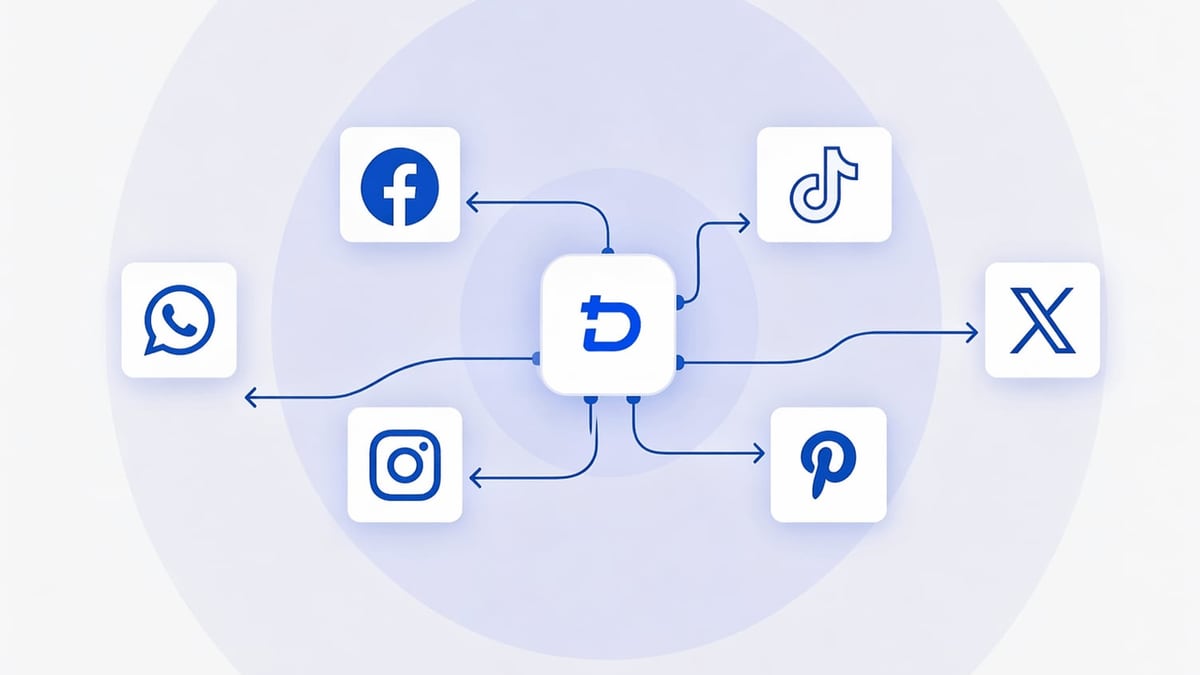
Many AI‑powered workflows—especially in marketing and e‑commerce—rely on managing dozens of social media or marketplace accounts. Automation platforms can schedule posts and scrape data, but they don’t solve the platform‑enforcement risk: multiple accounts that appear to share a device can get banned instantly.
That’s where an anti‑detect cloud phone becomes a strategic complement. DuoPlus Cloud Phone provisions isolated Android 15 environments with genuine ARM chips, unique device fingerprints, and dedicated IPs—so each account looks like it lives on a separate physical phone. You can combine your automation platform (say, Make or Zapier) with DuoPlus to run multi‑account campaigns safely. For detailed comparison of anti‑detect tools, see our in‑depth cloud phone showdown. If you schedule posts via SocialPilot, this integration guide shows how to marry scheduling with cloud phone isolation.
Related reading
- DuoPlus Cloud Phone vs Hidemium: Which Anti-Detect Tool Wins? - DuoPlus Cloud Phone vs Hidemium: Real Android cloud phones outperform browser anti-detection for TikTok, e-commerce, and crypto multi-account management.
- CapCut Review 2025: Is It the Best AI Video Editor? - Comprehensive CapCut review: explore AI tools, free vs Pro pricing, strengths, limitations, and real-world use cases. Decide if CapCut is right for your video editing workflow.
Sources and further reading
- Best AI Workflow Automation Tools for Enterprise in 2026 - Best AI Workflow Automation Tools for Enterprise in 2026. Discover the best AI automation tools for enterprise workflow process automation. Find your intelligent automation platform!
Frequently Asked Questions
What is an AI workflow automation tool?
It’s a platform that combines artificial intelligence (LLMs, agents, or machine learning models) with a visual workflow builder to execute multi‑step business processes. Unlike traditional automation, it can interpret unstructured data, make decisions, and adapt to edge cases without hard‑coded rules.
How does it differ from RPA?
RPA (UiPath, Automation Anywhere) typically follows rigid, rule‑based scripts to mimic human clicks and keystrokes. AI workflow automation uses large language models to reason about documents, emails, and conversations—handling the messy, variable cases RPA can’t .
Can I build AI agents without writing code?
Absolutely. Platforms like Lindy.ai, Relevance AI, and Zapier’s AI Agents feature provide visual builders. For more complex multi‑agent systems, you may eventually need some scripting (Python/JavaScript), but getting started requires zero code.
Which platform offers the best ROI?
In our tests, n8n’s self‑hosted version delivered the highest dollar‑for‑dollar ROI for any team with one technical member. For non‑technical teams, Lindy and Zapier tied for the quickest time‑to‑value.
Is security a concern with AI workflows?
Yes. Data flowing through third‑party AI models requires strict governance. Look for SOC 2 compliance, secret‑manager integration (AWS/GCP/Azure Vault), and role‑based access controls—especially if you process customer data. n8n, Workato, and UiPath are standout choices for enterprise‑grade security .
Conclusion
The AI workflow automation landscape in 2026 is rich and varied. n8n dominates for technical teams that prize flexibility and cost control; Zapier and Make remain kings of no‑code connectivity; and enterprise‑grade platforms like UiPath and Workato serve complex, regulated environments. The arrival of true multi‑agent platforms like Relevance AI signals a shift toward autonomous AI coworkers. Wherever you start, the key is to pick a platform that matches both your current capability and your scaling ambition—then complement it with tools that protect the full automation lifecycle, from execution to account security.
When building a custom AI orchestration layer or managing deployments across multiple automation systems, solutions like DuoPlus Cloud Phone can add an extra dimension of visibility and agent management, helping you keep complex automations well‑organized and measurable.
Now it’s time to build. Choose a platform from this list, spin up a free trial, and automate your first high‑impact workflow today.