
DuoPlus Cloud Phone vs BrowserJet vs VMOS Cloud: Honest Comparison
Comparing DuoPlus Cloud Phone, BrowserJet, and VMOS Cloud for multi-account management. We break down anti-detection, automation, pricing, and best use cases.
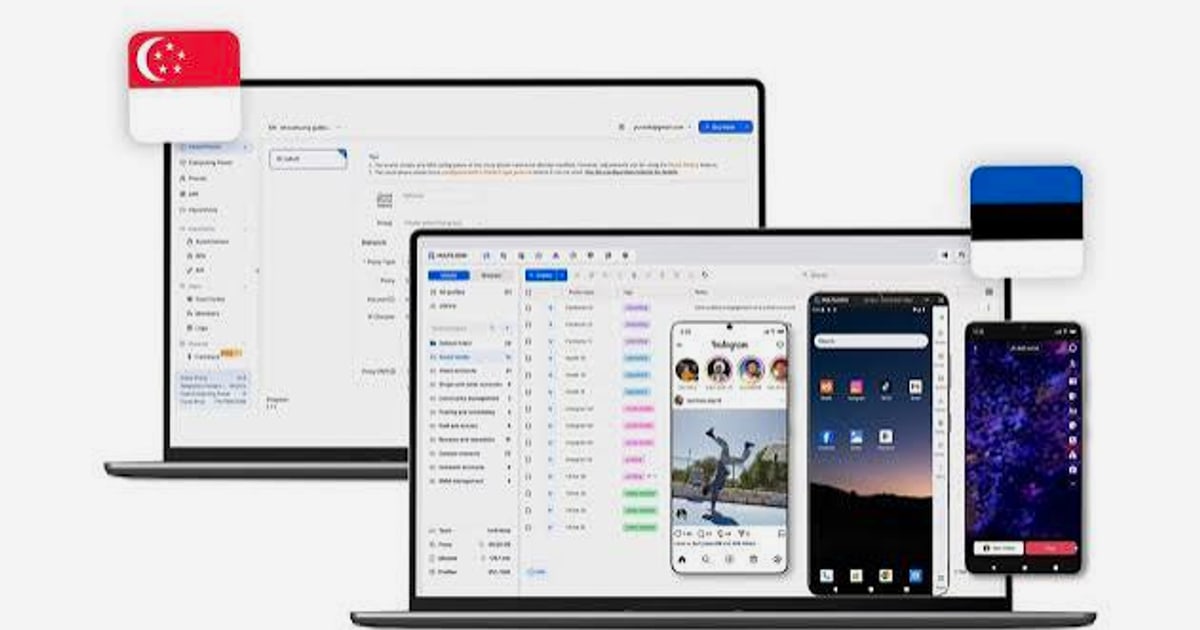
DuoPlus Cloud Phone vs BrowserJet vs VMOS Cloud: Which Fits Your Multi-Account Toolkit?
In this DuoPlus Cloud Phone comparison, we look at three very different tools that solve the same core problem: managing multiple accounts without getting flagged. DuoPlus Cloud Phone, BrowserJet, and VMOS Cloud each take a distinct approach—native cloud phones with real ARM chips, a tab-based anti-detect browser, and an automation-first Android cloud platform. Understanding their strengths helps you pick the right one for social media marketing, e‑commerce, crypto airdrop farming, or any scenario where account security and scale matter.
We’ll focus on what each tool does exceptionally well, then map those strengths to real-world workflows. Because no single tool wins everywhere, we only bring DuoPlus into the conversation where it has a supported advantage over the other two.
How BrowserJet Simplifies Multi-Session Browsing

DuoPlus Cloud Phone vs BrowserJet vs VMOS Cloud: Honest Comparison product interface and feature overview.
BrowserJet isn’t a cloud phone—it’s a specialized anti-detect browser built for power users who need many live web sessions at once. Each browser tab gets its own cookie jar and, optionally, a dedicated proxy IP. With one click you can refresh a tab’s IP without touching other sessions. That’s the tool’s core strength: instant, isolated web sessions that never cross signals.
For tasks that live entirely in a browser—ticket buying, sneaker copping, managing multiple social media or ad accounts that rely on web dashboards—BrowserJet cuts out the overhead of a full Android environment. There’s no virtual device to boot, no mobile OS to maintain. You open a tab, load a fresh identity, and go.
Mobile‑view emulation mimics a smartphone screen, so you can still preview mobile versions of sites. But make no mistake: this won’t run TikTok or Instagram as a native app. It’s a web‑first tool for quick, cost‑effective multi‑session work. If your entire multi‑account operation lives inside a browser, BrowserJet’s simplicity and speed are hard to beat.
VMOS Cloud: Automation-Driven Android Cloud Phones for Social Growth

DuoPlus Cloud Phone vs BrowserJet vs VMOS Cloud: Honest Comparison product interface and feature overview.
VMOS Cloud is a true cloud Android phone platform, and it’s built around native social media automation. With industry‑recognized anti‑detection (Google CTS certification, passed IPhey and PixelScan checks) and AI‑driven automation templates, it lets you warm up and grow accounts without scripting knowledge. You can schedule likes, comments, scrolls, and follows across TikTok, Instagram, Facebook, and more—all directly from its centralized dashboard.
Two features make VMOS Cloud stand out for large‑scale social media teams. First, SyncMaster batch control pushes the same action to multiple phones at once, so posting to 30 accounts takes seconds. Second, a free built‑in proxy and Smart IP matching ensure each device’s SIM, timezone, and geolocation align, reducing the risk of platform bans.
Billing is flexible: pay‑per‑minute lets you spin up phones for short campaigns, while permanent cloud phone options (VMOS Magic Box) exist for always‑on devices. For affiliate marketers, traffic arbitrageurs, and MCN agencies that need to automate real Android apps at scale, VMOS Cloud offers one of the most complete in‑platform automation suites available.
Where DuoPlus Cloud Phone Shines: Real ARM Hardware and Location Simulation

DuoPlus Cloud Phone vs BrowserJet vs VMOS Cloud: Honest Comparison product interface and feature overview.
DuoPlus takes a different path from typical virtualized cloud phones. It runs Android 15 on genuine ARM server chips—the same architecture found in physical smartphones—not on x86 emulation layers. Many banking, dating, and social apps check for emulation markers, and that’s where a real ARM environment can keep your accounts healthier over time.
But what truly sets DuoPlus apart is its granular GPS and SIM simulation. You can assign a cloud phone a specific geographic location with matching carrier and SIM card parameters. For apps that require location‑consistent behavior—Tinder, Bumble, Vinted, Zalo, or region‑locked games—this is a more convincing signal than a generic proxy change.
DuoPlus also integrates cloud numbers for SMS verification directly into the platform, so you don’t need to stitch together an external service. Pair that with no‑code AI Agent automation, unattended live streaming, and a browser‑based access method (no client downloads), and you get a cloud phone that works particularly well for cross‑border marketers, affiliate teams, and crypto airdrop hunters who need location‑aware, real‑device signals.
Free trial plans and a low temporary startup price ($0.15 per 30‑minute session) make it easy to test the real‑ARM difference before committing. If you need a cloud phone that behaves as close to a physical device as possible—especially for apps that punish emulation—DuoPlus has a legitimate edge.
Feature Matrix: DuoPlus Cloud Phone vs BrowserJet vs VMOS Cloud

DuoPlus Cloud Phone vs BrowserJet vs VMOS Cloud: Honest Comparison product interface and feature overview.
| Criteria | BrowserJet | VMOS Cloud | DuoPlus Cloud Phone |
|---|---|---|---|
| Tool type | Anti‑detect proxy browser | Cloud Android phone | Cloud Android phone on real ARM SoCs |
| Runs native Android apps? | No | Yes | Yes |
| Primary anti‑detection method | Per‑tab cookie jar + dedicated IP | Google CTS, IPhey/PixelScan pass, unique device params | Real ARM chip, unique fingerprints, GPS & SIM simulation |
| Automation | None (manual tab management) | Built‑in AI agent, batch SyncMaster, API | No‑code AI Agent, RPA, operation sync, unattended live streaming |
| Location simulation | IP‑based only (no GPS) | IP + timezone / language matching | Full GPS coordinates + SIM carrier simulation |
| SMS verification support | Not included | Available as add‑on service | Built‑in cloud numbers for verification |
| Pricing model | $89–$149/month flat | From $4.99/month, pay‑per‑minute available | From $1.4/month per device, temporary sessions $0.15/30min |
| Proxy | Built‑in VPN / proxy per tab | Free built‑in proxy, or bring your own | Bring‑your‑own proxy (extra cost) |
| Team collaboration | Basic account sharing | Role‑based permissions, batch control | Shared workspace, team permissions |
| Best for | Ticket buying, quick web multi‑sessions | Social‑media automation at scale, MCN agencies | Location‑sensitive apps, crypto airdrops, cross‑border e‑commerce |
Which Tool Should You Pick?
Choose BrowserJet when all your multi‑account work happens in a browser. If you’re buying limited‑release sneakers, managing multiple Facebook ad accounts through the web interface, or scraping data with rotating IPs, BrowserJet’s lightweight tab‑per‑session model saves time and resources. Just don’t expect to run mobile apps.
Pick VMOS Cloud if social media automation and strong anti‑detection are your top priority. The native AI agent, SyncMaster batch operations, and the blend of free proxy plus Google CTS certification make it a powerhouse for growing TikTok or Instagram accounts at scale. It’s a full Android cloud phone, so you get the real app experience and reliable automation.
Go with DuoPlus Cloud Phone when location realism and genuine ARM hardware matter. For dating apps, local marketplace selling on Vinted, region‑locked games, or crypto platforms that fingerprint hardware deeply, the combination of real ARM chips, GPS simulation, and built‑in SMS verification offers a distinct advantage. It also works entirely via browser—no client download—which lowers your device overhead. The free trial and low per‑minute rate let you test without risk.
Still debating between cloud phones? Read our deeper breakdown of DuoPlus vs BrowserJet vs GeeLark for another angle, or check our SMSPool review if you’re considering external SMS verification services.
Related reading
- DuoPlus Cloud Phone vs BrowserJet vs Antidetect Cloud: Compared - Compare DuoPlus Cloud Phone, BrowserJet, and Antidetect Cloud. Learn which suits your multi-account workflows—mobile apps vs browser sessions vs cloud profiles.
Sources and further reading
- Best 7 Antidetect Cloud Phone Tools for Multi-account in 2026: Detailed Guide - We compare and list 7 best android cloud phone tools in 2026 and share their honest review, performance so you can pick the best one. VMOS Cloud, GeeLark, MultiLogin, DuoPlus, BitCloudPhone, MoreLogin, and UgPhone included.
- VMOS — Product Matrix for Global Growth - VMOS — Product Matrix for Global Growthvmos.comhttps://www.vmos.comvmos.comhttps://www.vmos.com
- DuoPlus cloud phone review 2026: real features, pricing & limits - Honest DuoPlus cloud phone review with real pricing, RPA automation, and limitations. Is DuoPlus the right cloud phone for your accounts?
Frequently Asked Questions
Can BrowserJet run mobile apps like TikTok or Instagram? No. BrowserJet is a web browser that mimics mobile views, but it cannot install or run native Android or iOS apps. You need a cloud phone for true app operation.
Is VMOS Cloud suitable for quick ticket buying or web‑only tasks? It’s overkill. VMOS Cloud boots a full Android phone over the cloud, which introduces latency and cost that a proxy browser like BrowserJet avoids. Stick to a browser if you don’t need the app environment.
Does DuoPlus offer pay‑as‑you‑go billing? Yes. The temporary startup plan charges $0.15 per 30‑minute session with a $0.90 daily cap per device, so you pay only when the phone is running. Subscription plans are also available.
Which tool has the strongest anti‑detection? Both VMOS Cloud and DuoPlus invest heavily in anti‑detection, but they take different approaches. VMOS Cloud highlights Google CTS certification and third‑party checker passes. DuoPlus relies on real ARM hardware and unique device fingerprints. For pure web sessions, BrowserJet’s cookie and IP isolation works well if you stay browser‑only.
Can I share cloud phones with my team? Yes. VMOS Cloud and DuoPlus both include team collaboration and role‑based permissions. BrowserJet is primarily a single‑user tool with basic account sharing.
The Bottom Line
There’s no one‑size‑fits‑all winner here—each tool dominates its own niche. BrowserJet excels at fast, tab‑based web sessions. VMOS Cloud delivers robust Android automation with proven anti‑detection for social media teams. And DuoPlus Cloud Phone brings genuine ARM hardware and full location control for apps that demand it. Match the tool to your actual workflow, and you’ll manage accounts more safely and efficiently.
For further reading, see our comparison of DuoPlus Cloud Phone vs GeeLark vs Hippo Cloud Phone or explore independent feedback in this detailed DuoPlus review on Multilogin’s blog. VMOS Cloud’s anti‑detection specifics are outlined in their own cloud phone guide.