
DuoPlus Cloud Phone vs GeeLark vs MoreLogin: 2026 Comparison
Compare DuoPlus Cloud Phone, GeeLark, and MoreLogin for multi-account management. See which fits real Android cloud phones, automation, or anti-detect browsing.
DuoPlus Cloud Phone vs GeeLark vs MoreLogin: Which Multi-Account Platform Fits Your Workflow?
Choosing between DuoPlus Cloud Phone, GeeLark, and MoreLogin comes down to one question: do you need a dedicated Android cloud phone environment, a combined anti-detect browser plus cloud phone workspace, or a budget-friendly entry point for multi-account operations? All three tools help marketers, e-commerce operators, and agencies run multiple accounts without physical device farms, but they approach the problem differently.
This comparison breaks down how each platform handles device fingerprints, automation, team workflows, and pricing so you can match the right tool to your specific use case.
How the Three Platforms Differ at a Glance
DuoPlus Cloud Phone vs GeeLark vs MoreLogin: 2026 Comparison - How the Three Platforms Differ at a Glance.
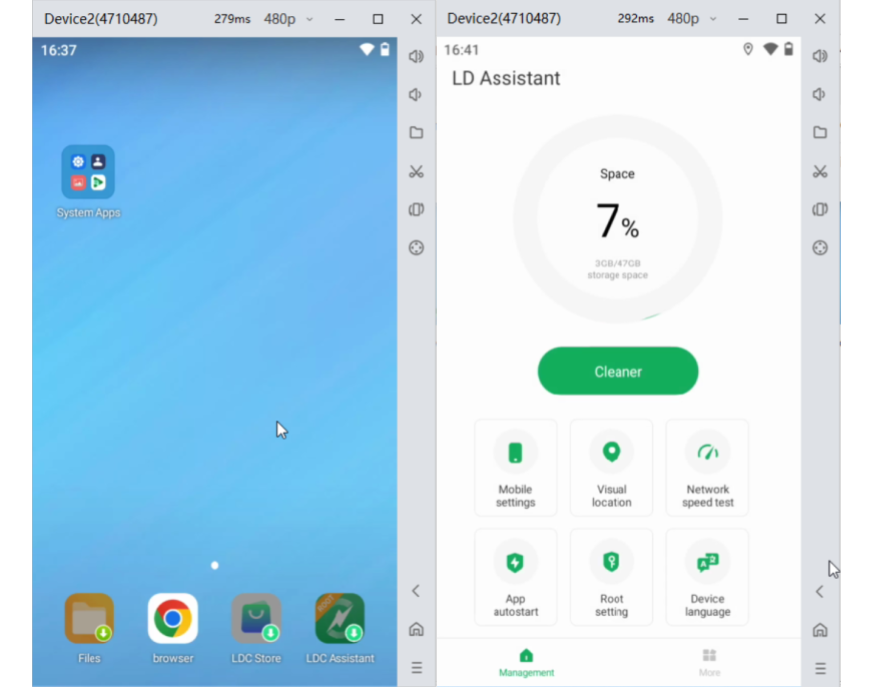
DuoPlus Cloud Phone is a dedicated anti-detect cloud phone service built on ARM-based virtual Android devices. It focuses on mobile-first account operations for social media marketers, content creators, and agencies who need to scale TikTok, Instagram, YouTube, or Facebook accounts without association risk.
GeeLark combines cloud phones with anti-detect browser profiles in one dashboard. It serves a broader range of users, including affiliate marketers, airdrop farmers, app developers, and SEO professionals who need both mobile and desktop environments.
MoreLogin positions itself as a unified workspace for secure multi-account operations, pairing a mature anti-detect browser with cloud-based Android devices. Its strengths lie in team collaboration, API-driven automation, and a free tier that lowers the barrier to entry.
Device Environment and Anti-Detection
DuoPlus Cloud Phone vs GeeLark vs MoreLogin: 2026 Comparison - Device Environment and Anti-Detection.
DuoPlus Cloud Phone: Android 15-First Architecture
DuoPlus Cloud Phone is the world's first Android 15 anti-detect cloud phone platform. Each cloud phone runs as an independent ARM-based virtual Android device with a unique device fingerprint, globally simulated GPS location, dedicated SIM data, and proxy IP. The one-click reskin feature instantly refreshes device parameters, which is useful for fast account rotation when you need to retire an environment and start fresh.
The platform's unlimited multi-instance support means you can purchase and control as many cloud phones as your operation requires. For teams managing TikTok matrix marketing or YouTube channel portfolios, this eliminates the physical constraints of traditional device farms.
GeeLark: Cloud Phones Plus Browser Profiles
GeeLark's anti-detection approach spans both mobile and desktop. Its ARM-based cloud phones carry unique device fingerprints including IMEI, Android ID, and MAC address. On the browser side, GeeLark provides spoofed fingerprint profiles with proxy integration for geo-spoofing.
This dual approach makes GeeLark a practical choice if your workflow mixes app-based account management with desktop tasks like ad verification or SERP analysis. You get both environments under one subscription rather than stitching together separate tools.
MoreLogin: Dual-Engine Isolation
MoreLogin's dual-engine architecture separates stable browser profiles from full Android OS cloud phones. Each browser profile carries a unique fingerprint, while cloud phones run complete Android environments. The zero-knowledge encrypted sync adds a security layer for teams that share credentials across members.
MoreLogin's seven years in the anti-detect browser market and its claim of over 5,000,000 safeguarded accounts indicate a mature fingerprinting foundation. For operations that already rely on browser-based multi-accounting and want to add mobile capability, this dual-engine design reduces the learning curve.
Automation Capabilities
DuoPlus Cloud Phone vs GeeLark vs MoreLogin: 2026 Comparison - Automation Capabilities.
DuoPlus Cloud Phone: No-Code AI Agent
The integrated DUO+ AI Agent is DuoPlus Cloud Phone's standout automation feature. You issue natural-language commands to automate app interactions like posting, commenting, or following. This no-code approach removes the scripting barrier for marketers who want to scale engagement without hiring developers.
For example, a TikTok matrix operator could instruct the AI agent to "like and comment on posts with a specific hashtag across all active cloud phones" and let the platform handle the repetitive work.
GeeLark: RPA Templates and AI Copilot
GeeLark offers no-code RPA templates for automation plus an AI copilot for content creation and task automation. The Synchronizer feature enables bulk control across multiple devices, which is valuable for launching coordinated actions across a phone farm.
A dropshipper case study highlighted by GeeLark shows the practical impact: 31 hours reclaimed per week, revenue growth from $15K to $45K monthly, and account bans reduced from 37 to zero. This suggests the automation and isolation combination works well for e-commerce operators running multiple storefront accounts.
MoreLogin: API, CLI, and MCP Support
MoreLogin's automation strength lies in developer-friendly extensibility. RPA, API, CLI, and MCP support mean you can integrate cloud phone operations into existing workflows built on n8n, Zapier, or Make. For technical teams that already have automation pipelines, this programmatic access is a significant advantage.
Batch operations and synchronization features also support non-technical users who need to manage multiple profiles efficiently from the dashboard.
Team Collaboration and Account Management
DuoPlus Cloud Phone centralizes account operations through a unified dashboard that supports team sharing and cross-platform control from any browser or device. This is useful for agencies where multiple team members need access to different account portfolios without sharing raw credentials.
MoreLogin emphasizes team collaboration with permission management and profile sharing. The ability to grant granular access levels makes it suitable for larger teams where different members handle different account sets. The free tier with 2 profiles and 100 cloud phone minutes also lets small teams test workflows before committing.
GeeLark's single-dashboard approach covers both cloud phones and browser profiles, which simplifies oversight when your team manages mixed mobile and desktop accounts.
Pricing Considerations
Pricing models differ significantly across the three platforms, and your total cost depends heavily on usage patterns.
DuoPlus Cloud Phone operates on a per-device rental model. The more cloud phones you run, the higher your monthly cost. This scales predictably for operations that need a fixed number of always-on devices, but costs can accumulate quickly for large account portfolios.
GeeLark combines subscription tiers with pay-as-you-go usage minutes. You pay for profiles plus per-minute device usage, which can generate unpredictable bills for heavy phone farm operations. Unlimited device rental is available at a higher per-device monthly rate.
MoreLogin uses pay-as-you-go cloud phone billing alongside its browser subscription. The free tier with 2 profiles and 100 cloud phone minutes provides a low-risk way to evaluate the platform. For teams already paying for MoreLogin's anti-detect browser, adding cloud phone capability extends the existing investment rather than requiring a separate tool.
Which Platform Should You Choose?
Choose DuoPlus Cloud Phone if: Your operation is mobile-first and you need Android 15 cloud phones with one-click reskin for rapid account rotation. The DUO+ AI Agent's natural-language automation is particularly valuable for social media marketers who want to scale engagement without writing code. The platform suits TikTok matrix marketing, YouTube channel management, and Instagram ad operations where mobile authenticity is critical.
Choose GeeLark if: You need both cloud phones and anti-detect browser profiles in one dashboard. Affiliate marketers, airdrop farmers, and SEO professionals who split time between mobile apps and desktop research will appreciate the unified approach. The Synchronizer and RPA templates support bulk operations, while the AI copilot assists with content workflows.
Choose MoreLogin if: You already use an anti-detect browser and want to add cloud phone capability without switching ecosystems. The API, CLI, and MCP support make it the strongest choice for technical teams with existing automation pipelines. The free tier also makes it the most accessible entry point for testing multi-account workflows.
For a deeper look at how DuoPlus Cloud Phone compares with other platforms, see our DuoPlus Cloud Phone vs AdsPower vs MoreLogin comparison or the DuoPlus Cloud Phone vs GeeLark vs Kameleo breakdown.
Related reading
- DuoPlus Cloud Phone vs Hidemium vs VMOS: 2026 Comparison - Compare DuoPlus Cloud Phone, Hidemium, and VMOS for multi-account management. See which fits real Android cloud phones, anti-detect browsing, or automation.
- DuoPlus Cloud Phone vs AdsPower vs BlueGenie Cloud Phone: 2026 Multi-Account Management Comparison - Compare DuoPlus Cloud Phone, AdsPower, and BlueGenie Cloud Phone on multi-account management, anti-detection, automation, and use cases to find the best solution for cross-border e-commerce and social media marketing.
- DuoPlus Cloud Phone vs Hidemium vs VMOS Cloud: 2026 Comparison - Compare DuoPlus Cloud Phone, Hidemium, and VMOS Cloud for multi-account management. See which fits real Android cloud phones, anti-detect browsing, or automation.
Sources and further reading
- DuoPlus Alternatives: 5 Smarter Cloud Phone Solutions for 2026 - Looking for a DuoPlus alternative? Compare the best cloud phone and mobile browser solutions for mobile multi-accounting.
- Best 7 Antidetect Cloud Phone Tools for Multi-account in 2026: Detailed Guide - We compare and list 7 best android cloud phone tools in 2026 and share their honest review, performance so you can pick the best one. VMOS Cloud, GeeLark, MultiLogin, DuoPlus, BitCloudPhone, MoreLogin, and UgPhone included.
- 10 Best Cloud Android Services & Apps: Tested & Reviewed 2026 - Looking for the best cloud android phone? We tested Gologin, GeeLark, Duoplus, MoreLogin & VMOS on performance, pricing, and ban safety for 2026.
Frequently Asked Questions
Is DuoPlus Cloud Phone better than GeeLark for TikTok marketing?
DuoPlus Cloud Phone's Android 15 architecture and DUO+ AI Agent make it well-suited for TikTok matrix marketing where you need natural-language automation and rapid device reskinning. GeeLark offers comparable cloud phone isolation plus browser profiles, which helps if your TikTok workflow also involves desktop research or ad management. The better choice depends on whether you need browser profiles alongside mobile environments.
Does MoreLogin include cloud phones in its free tier?
Yes. MoreLogin's free tier includes 2 browser profiles and 100 cloud phone minutes, making it a practical way to test cloud phone workflows before upgrading. Additional cloud phone usage follows a pay-as-you-go model.
Can I run multiple accounts on a single cloud phone?
Best practice across all three platforms is one account per cloud phone environment. Running multiple accounts on the same device fingerprint increases association risk. DuoPlus Cloud Phone, GeeLark, and MoreLogin all support multi-instance management so you can assign each account its own isolated environment.
Do these platforms include proxies?
Proxy inclusion varies. DuoPlus Cloud Phone provides dedicated SIM data and proxy IP as part of its cloud phone environment. GeeLark supports proxy integration for geo-spoofing but generally requires you to bring your own proxies. MoreLogin supports built-in and custom ISP proxies depending on your plan. Always verify current proxy policies before committing to a subscription.
Which platform is most cost-effective for a small team?
MoreLogin's free tier and pay-as-you-go billing make it the lowest-cost entry point for small teams testing multi-account workflows. GeeLark's subscription-plus-usage model can work for light usage but becomes expensive with heavy phone farm operations. DuoPlus Cloud Phone's per-device pricing scales predictably when you need a fixed number of always-on devices.
Conclusion
DuoPlus Cloud Phone, GeeLark, and MoreLogin each solve multi-account management from a different angle. DuoPlus Cloud Phone excels as a dedicated Android 15 anti-detect cloud phone platform with no-code AI automation. GeeLark bridges mobile and desktop with cloud phones plus browser profiles in a unified dashboard. MoreLogin extends a mature anti-detect browser ecosystem with cloud phone capability, API access, and a generous free tier.
Your decision should follow your primary workflow. Mobile-first social media operations will find DuoPlus Cloud Phone's focus valuable. Mixed mobile and desktop teams may prefer GeeLark's unified approach. Technical teams with existing browser-based automation will benefit most from MoreLogin's extensibility. Test the free tiers and trial periods where available, and match the platform to the accounts you actually manage rather than the accounts you plan to manage someday.