
DuoPlus Cloud Phone vs Kameleo vs VMOS: Which Wins?
Compare DuoPlus Cloud Phone, Kameleo, and VMOS for multi-account management. See which fits real Android cloud phones, anti-detect browsing, or automation.
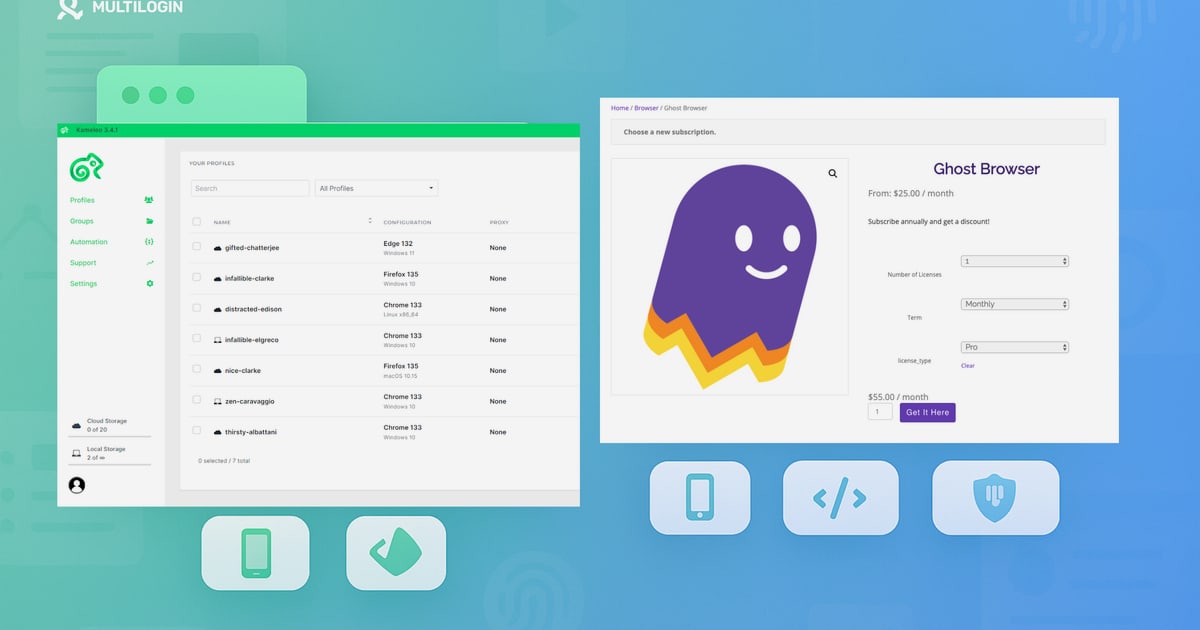
DuoPlus Cloud Phone vs Kameleo vs VMOS: Which Multi-Account Tool Fits Your Workflow?
Choosing between DuoPlus Cloud Phone, Kameleo, and VMOS is really a choice between three different approaches to multi-account management. One gives you real Android devices in the cloud. Another gives you fingerprint-controlled browser profiles. The third gives you virtualized Android environments with proxy and device management baked in.
Each tool solves a real problem, but they solve different ones. If you run TikTok, Instagram, or YouTube accounts that depend on native mobile apps, a browser-based tool will always be a workaround. If you automate web scraping or browser-based QA, a cloud phone may be more than you need.
This comparison breaks down where each tool is strong, where it struggles, and which use cases it actually fits.
Search Intent: What Are You Really Comparing?
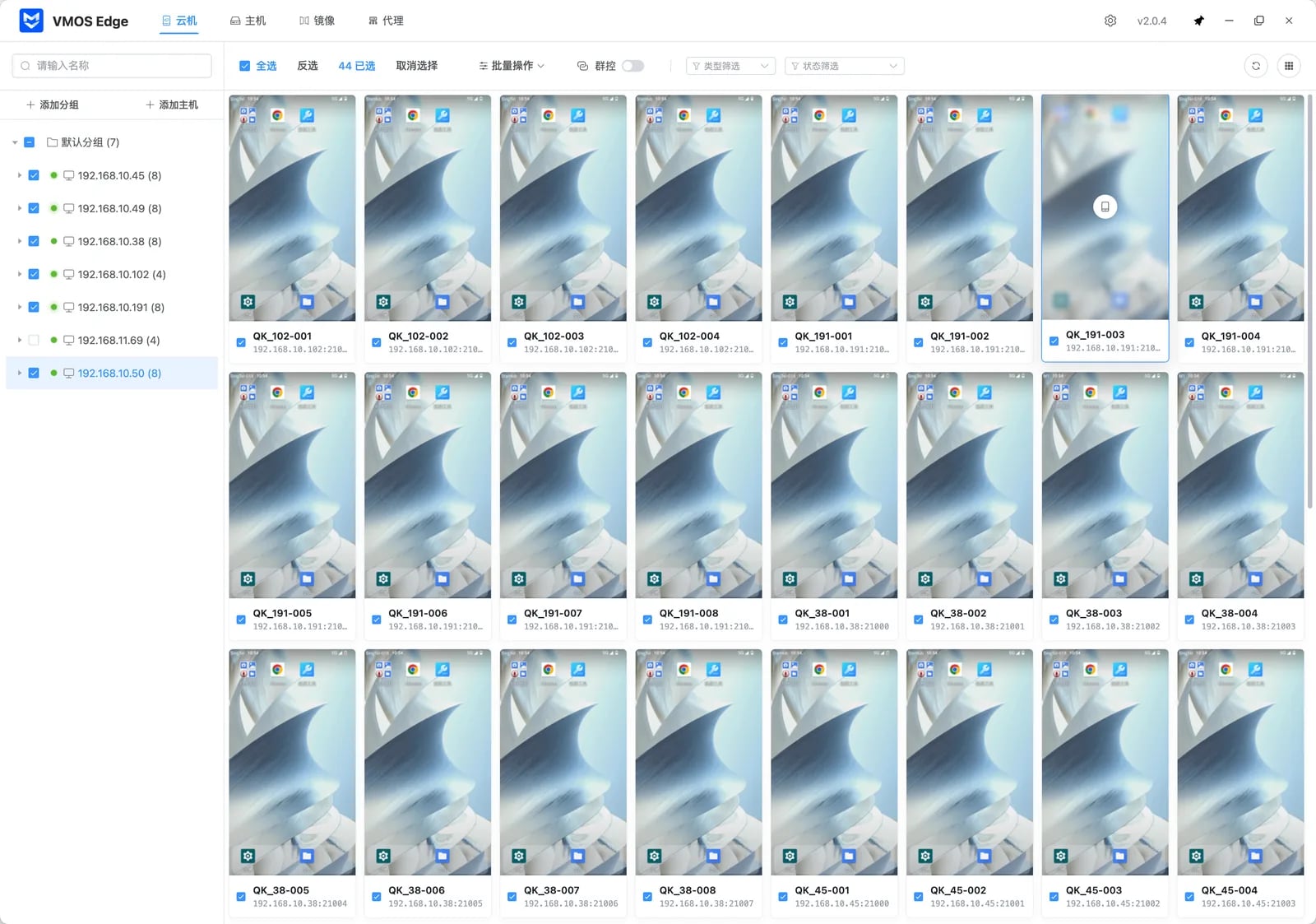
VMOS product interface.
Most people searching for "DuoPlus Cloud Phone vs Kameleo vs VMOS" are trying to answer one of these questions:
- Do I need a real Android cloud phone, or is an anti-detect browser enough?
- Which tool keeps my accounts safer from bans and linking?
- Which setup scales without becoming a full-time maintenance job?
- Which option supports automation without requiring developer skills?
The honest answer is that no single tool wins every category. The right choice depends on whether your accounts live in mobile apps, web browsers, or both.
What Each Tool Actually Is

Kameleo product interface.
DuoPlus Cloud Phone: Real Android Devices in the Cloud
DuoPlus Cloud Phone is an anti-detect cloud phone platform built on real ARM-based Android 15 virtual devices. Each cloud phone has its own device fingerprint, simulated GPS location, dedicated SIM data, and proxy IP. That means every account runs in an environment that looks like a separate physical phone.
This matters for mobile-first platforms. TikTok, Instagram, Facebook, and YouTube apps read device-level signals that browser profiles cannot fully reproduce. A cloud phone runs the actual Android app with persistent app data, login history, and device state.
Key capabilities include:
- Unlimited multi-instance support for scaling account operations
- One-click reskin to refresh device parameters for account rotation
- A unified dashboard for team sharing and cross-platform control
- A no-code DUO+ AI Agent that automates posting, commenting, and following through natural-language commands
- Use cases spanning TikTok matrix marketing, YouTube channel management, ad operations, Telegram growth, and Reddit engagement
DuoPlus positions itself as a replacement for physical device farms. Instead of buying and maintaining dozens of phones, teams rent cloud devices that behave like real hardware.
Kameleo: Developer-Focused Anti-Detect Browser
Kameleo is an anti-detect browser aimed at technical users who need granular control over browser fingerprints. It supports Windows, macOS, and Android, and integrates with automation frameworks like Playwright, Puppeteer, and Selenium.
Kameleo's strengths sit in browser-based workflows:
- Unlimited real browser fingerprints with manual control over Canvas, WebGL, audio, fonts, and hardware signals
- Fast release cycles that keep browser versions current
- Continuously auto-tested stealth mode with claims of bypassing systems like DataDome and Cloudflare
- Developer-friendly SDKs and Docker-ready deployment
- Strong fit for web scraping, affiliate marketing, and browser automation
Kameleo is not a cloud phone. It emulates mobile browser behavior, but it does not run native Android apps on real ARM hardware. For mobile app workflows, that is a meaningful limitation.
VMOS: Android Virtualization and Cloud Device Management
VMOS offers an all-in-one Android virtualization platform with global proxy networks, cloud device management, multi-account operations, and AI-powered customer service. It targets cross-border teams, e-commerce sellers, and social media managers who need multiple Android instances.
Core features include:
- Virtual Android devices running on cloud servers
- Multi-account management without detection
- Integrated proxy networks for global access
- Privacy positioning that avoids collecting personally identifiable information
VMOS sits closer to DuoPlus in concept because both provide Android environments. The difference comes down to implementation depth, device fingerprint independence, and how the platform handles location, SIM data, and app-level signals.
Head-to-Head Comparison
Kameleo product interface.
| Criteria | DuoPlus Cloud Phone | Kameleo | VMOS |
|---|---|---|---|
| Core approach | Real ARM Android cloud phones | Anti-detect browser profiles | Android virtualization platform |
| Native mobile app support | Yes, runs real Android apps | No, browser-based emulation only | Yes, virtual Android instances |
| Device fingerprint independence | Unique per cloud phone | Manual fingerprint control | Virtualized Android environments |
| Built-in proxy and SIM data | Yes, dedicated per device | No, requires third-party proxies | Yes, integrated proxy network |
| Automation | No-code AI agent | Developer SDKs, Playwright, Puppeteer, Selenium | AI-powered customer service tools |
| Team collaboration | Unified dashboard with sharing | Limited | Cloud device management |
| Best fit | Social media matrix operations, e-commerce, agency work | Web scraping, browser automation, technical QA | Cross-border e-commerce, multi-account Android operations |
Where Each Tool Wins
Kameleo product interface.
DuoPlus Cloud Phone Advantages
Real mobile app environments. DuoPlus runs actual Android apps on ARM-based cloud devices. TikTok, Instagram, and YouTube apps see a genuine device, not a browser pretending to be one. This is the strongest protection for mobile-first account operations.
Independent device identity per account. Each cloud phone carries its own fingerprint, GPS location, SIM data, and proxy IP. Accounts do not share underlying device signals, which reduces the risk of platform linking.
No-code automation. The DUO+ AI Agent lets non-technical users automate repetitive app actions through natural-language commands. You do not need to write Playwright scripts or manage Docker containers to scale posting and engagement.
Team operations built in. The unified dashboard supports team sharing and cross-platform control from any browser or device. Agencies can assign cloud phones to team members without handing over physical hardware.
One-click reskin for rotation. When an account needs a fresh identity, reskinning refreshes all device parameters instantly. This supports fast account rotation without manual reconfiguration.
Kameleo Advantages
Deep fingerprint control. Kameleo gives technical users manual control over Canvas, WebGL, audio, fonts, and hardware signals. For browser-based stealth, that granularity is hard to match.
Strong automation ecosystem. Native integrations with Playwright, Puppeteer, and Selenium make Kameleo a solid choice for developers who already work in those frameworks. Docker-ready deployment suits CI/CD pipelines and headless automation.
Fast browser updates. Kameleo releases browser updates quickly, which matters when platforms patch detection methods. The continuously auto-tested stealth mode is designed to keep pace with anti-bot systems.
Offline and local operation. Kameleo can run locally, which appeals to users who need restricted-environment support or prefer not to depend on cloud infrastructure.
VMOS Advantages
Integrated proxy network. VMOS bundles global proxy access with its Android virtualization. Teams do not need to source and configure third-party proxies separately.
Cloud device management at scale. VMOS is built for cross-border operations that need many Android instances managed from a central dashboard.
Privacy-focused positioning. VMOS states it does not collect personally identifiable information, which may matter for teams with strict data-handling requirements.
Where Each Tool Falls Short
Kameleo Limitations
Kameleo is a browser tool, not a mobile device platform. For TikTok, Instagram, and other mobile-first apps, browser emulation cannot reproduce the full set of device signals that native apps expose. Users often report that mobile emulation is sensitive to small inconsistencies that trigger extra checks or logouts.
Kameleo also requires users to bring their own proxies. There is no built-in residential IP pool, so teams must source, test, rotate, and maintain proxy subscriptions separately. Profile storage is local by default, which creates recovery risk if a machine fails and makes team sharing harder.
The learning curve is real. Kameleo exposes complexity rather than abstracting it. Non-technical marketers and VA teams often find the setup demanding, and support responsiveness has been inconsistent according to user reports.
VMOS Limitations
VMOS virtualizes Android, but the depth of device independence varies. Virtualized environments can share underlying host characteristics if not carefully isolated, and the platform's fingerprinting approach is less explicitly documented than a dedicated anti-detect cloud phone.
VMOS also positions itself broadly across proxy networks, device management, and AI customer service. That breadth can mean less depth in any single area compared with a platform built specifically for anti-detect mobile account operations.
DuoPlus Cloud Phone Limitations
DuoPlus is not a browser automation tool. If your workflow is primarily web scraping, browser-based QA, or headless automation with Playwright or Puppeteer, Kameleo's developer ecosystem will fit better.
Cloud phones also require a stable internet connection. Everything runs remotely, so local offline operation is not an option. Teams that need on-premise or restricted-environment deployment should evaluate that constraint carefully.
Decision Guide: Which Tool Should You Choose?
Choose DuoPlus Cloud Phone if:
- Your accounts live in TikTok, Instagram, YouTube, Facebook, or other mobile apps
- You manage social media matrix operations or e-commerce storefronts at scale
- You want no-code automation instead of writing scripts
- Your team needs shared access to cloud devices from any browser
- You are replacing or avoiding a physical device farm
Choose Kameleo if:
- Your work is browser-based: web scraping, affiliate landing pages, ad dashboards
- You already use Playwright, Puppeteer, or Selenium
- You need deep manual fingerprint control and are comfortable with technical setup
- You prefer local operation and can manage your own proxies
Choose VMOS if:
- You need Android virtualization with integrated proxy access
- Your team manages cross-border e-commerce operations
- You want a broader platform that combines device management with AI customer service tools
Practical Example: Scaling a TikTok Operation
Imagine you run 30 TikTok accounts for different client niches. Each account needs its own device identity, location, and app data. A browser-based tool like Kameleo cannot run the TikTok app natively, so you would be limited to browser sessions that TikTok's app-level detection may flag.
With DuoPlus Cloud Phone, each account gets its own ARM-based Android 15 device with a unique fingerprint, GPS location, SIM data, and proxy IP. The DUO+ AI Agent can automate posting and engagement across accounts without manual scripting. When an account needs rotation, one-click reskin refreshes its parameters.
VMOS could also run Android instances, but the depth of per-device independence and anti-detect engineering varies. For high-risk social platforms, the dedicated anti-detect design of a cloud phone platform is often the safer bet.
For a deeper look at how DuoPlus compares with other anti-detect browsers, see DuoPlus Cloud Phone vs Hidemium vs Kameleo and DuoPlus Cloud Phone vs VMOS Cloud vs Kameleo.
Practical Example: Browser Automation for Data Extraction
Now imagine you need to scrape product data from hundreds of e-commerce pages while avoiding Cloudflare and DataDome blocks. A cloud phone is overkill here. You need browser profiles with controlled fingerprints and automation hooks.
Kameleo fits this workflow. You can spin up Docker containers, drive them with Puppeteer or Playwright, and rotate fingerprints across requests. The fast browser update cycle helps you stay ahead of anti-bot patches.
DuoPlus Cloud Phone would not be the right tool for this job, and VMOS's Android virtualization is also not designed for headless browser scraping at that scale.
The Bottom Line
DuoPlus Cloud Phone, Kameleo, and VMOS are not direct substitutes for each other. They target different layers of the multi-account stack.
Kameleo is the strongest choice for technical browser automation and fingerprint control. VMOS offers a broad Android virtualization platform with integrated proxies. DuoPlus Cloud Phone is purpose-built for mobile-first account operations that need real Android environments, independent device identities, and no-code scaling.
If your accounts depend on native mobile apps, choose the tool that runs them natively. If your work happens in a browser, choose the tool built for browser stealth. Mixing the two usually means compromising on the layer that matters most.
For more comparisons across cloud phones and anti-detect browsers, check out DuoPlus Cloud Phone vs MoreLogin vs SessionBox One and DuoPlus Cloud Phone vs AdsPower vs SessionBox One.
Related reading
- DuoPlus Cloud Phone vs Hidemium vs GeeLark: 2026 Comparison - Compare DuoPlus Cloud Phone, Hidemium, and GeeLark for multi-account management. See which fits real Android cloud phones, anti-detect browsers, or hybrid automation.
Sources and further reading
- Top Antidetect Browsers for Digital Nomads (Best in 2026) - Multilogin - Digital nomads need privacy & multiaccount freedom. Discover the best antidetect browsers for digital nomads to work securely from anywhere.
- Kameleo vs GhostBrowser: Complete Comparison 2026 - Multilogin - Kameleo vs GhostBrowser comparison reveals the best anti detect browser for 2026. Which proxy browser truly protects multiple accounts?
- GoLogin vs Kameleo – Which Anti-Detect Browser Wins in 2026? - GoLogin vs Kameleo: Which anti-detect browser is better for multi-accounting, automation? Discover the best pick for your needs in 2026.
FAQ
Is DuoPlus Cloud Phone better than Kameleo?
It depends on your workflow. DuoPlus Cloud Phone is better for mobile app account management because it runs real Android apps on ARM-based cloud devices. Kameleo is better for browser-based automation and fingerprint control. They solve different problems.
Can Kameleo run TikTok or Instagram apps?
No. Kameleo emulates mobile browser behavior, but it does not run native Android or iOS apps. For platforms where app-level device signals matter, a cloud phone like DuoPlus is the more suitable environment.
Does VMOS provide the same anti-detect protection as DuoPlus Cloud Phone?
VMOS provides Android virtualization with integrated proxies, but its anti-detect depth is less explicitly documented. DuoPlus Cloud Phone is built specifically for anti-detect mobile account operations, with independent fingerprints, GPS, SIM data, and proxy IPs per device.
Which tool is easiest for non-technical users?
DuoPlus Cloud Phone is designed for marketers and operators without developer skills. The no-code DUO+ AI Agent automates app actions through natural-language commands. Kameleo has a steeper learning curve and is aimed at technical users.
Do I need to buy separate proxies for these tools?
DuoPlus Cloud Phone includes dedicated SIM data and proxy IPs per cloud phone. VMOS bundles a global proxy network. Kameleo requires you to source and configure third-party proxies yourself.
Can these tools support team collaboration?
DuoPlus Cloud Phone includes a unified dashboard with team sharing and cross-platform control. VMOS offers cloud device management for teams. Kameleo's collaboration features are limited, and profile storage is local by default.
Conclusion
The DuoPlus Cloud Phone vs Kameleo vs VMOS decision comes down to one question: where do your accounts actually live?
If they live in mobile apps, DuoPlus Cloud Phone gives you the closest thing to a physical device farm without the hardware. Real Android 15 environments, independent fingerprints, built-in SIM and proxy data, and no-code automation make it a strong fit for social media matrix operations and e-commerce teams.
If they live in browsers, Kameleo's fingerprint control and automation ecosystem are hard to beat for technical users. And if you need a broader Android virtualization platform with integrated proxies, VMOS is worth evaluating.
Match the tool to the environment your accounts depend on, and you will avoid the most common multi-account failure: using a browser workaround where a real device environment is required.