
DuoPlus Cloud Phone vs Hidemium vs VMOS: 2026 Comparison
Compare DuoPlus Cloud Phone, Hidemium, and VMOS for multi-account management. See which fits real Android cloud phones, anti-detect browsing, or automation.
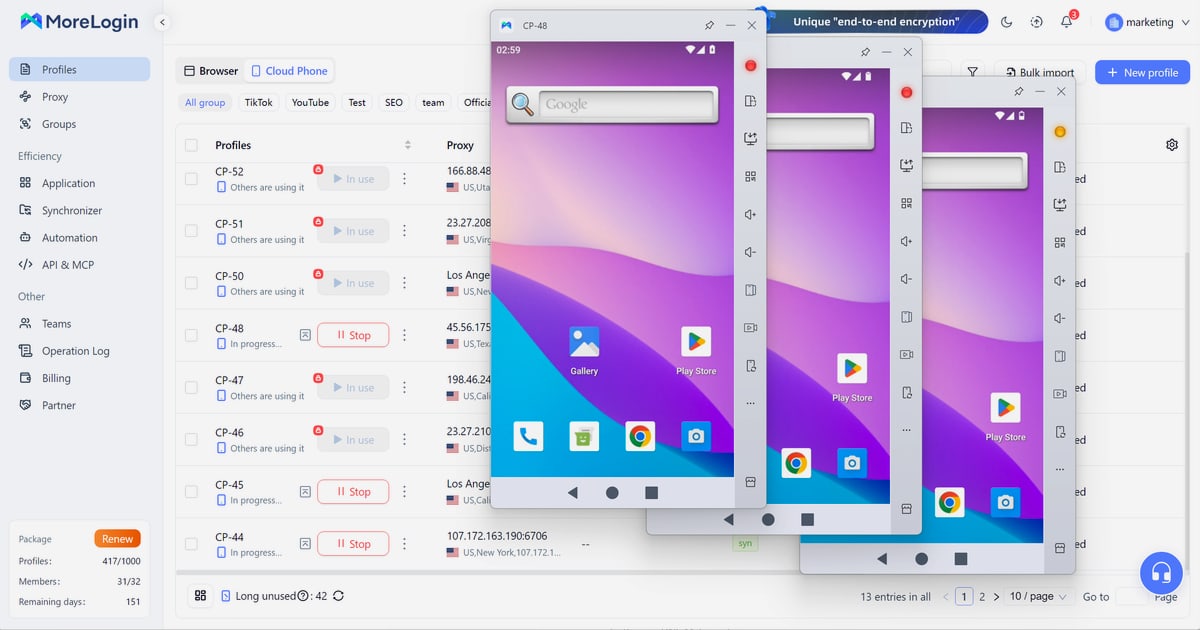
DuoPlus Cloud Phone vs Hidemium vs VMOS: 2026 Comparison
Choosing between a cloud phone platform, an anti-detect browser, and an Android virtualization suite can feel like comparing three different tool categories. Yet marketers, e-commerce operators, and agencies frequently weigh exactly these options when planning multi-account operations. This comparison breaks down DuoPlus Cloud Phone, Hidemium, and VMOS across the criteria that matter most: environment type, anti-detection approach, automation, scalability, and ideal use cases.
Quick Verdict: Which Tool Fits Your Workflow?
DuoPlus Cloud Phone vs Hidemium vs VMOS: 2026 Comparison - Quick Verdict: Which Tool Fits Your Workflow?.
- Choose Hidemium if you manage browser-based accounts and want a lightweight, cost-effective anti-detect browser with a free plan and no-code automation.
- Choose VMOS if you need Android virtualization with cloud device management and global proxy integration for developer-oriented or mixed workflows.
- Choose DuoPlus Cloud Phone if you need real ARM-based Android 15 cloud phones with dedicated SIM data, proxy IPs, and a unified dashboard for large-scale social media and e-commerce account operations.
What Each Product Actually Is

DuoPlus Cloud Phone vs Hidemium vs VMOS: 2026 Comparison - What Each Product Actually Is.
Understanding the core architecture of each tool prevents mismatched expectations.
DuoPlus Cloud Phone: Real Android Devices in the Cloud
DuoPlus Cloud Phone is an anti-detect cloud phone service built on real ARM-based virtual Android devices hosted in the cloud. Each instance includes an independent device fingerprint, globally simulated GPS location, dedicated SIM data, and proxy IP. The platform runs Android 15, supports unlimited multi-instance scaling, and includes one-click reskin to refresh device parameters for account rotation. A unified dashboard supports team sharing and cross-platform control from any browser.
Hidemium: Anti-Detect Browser Profiles
Hidemium is an anti-detect browser that creates isolated browser profiles, each with a unique digital fingerprint and optional proxy. It targets digital marketers, affiliate marketers, e-commerce sellers, and social media managers who need to operate multiple accounts on the same platform. Features include fingerprint spoofing for WebGL, WebRTC, and fonts; proxy integration for HTTP, SOCKS, IPv6, and residential IPs; bulk profile creation; cookie import/export; and an AI Node for natural language automation. A free plan and frequent updates make it accessible for smaller teams.
VMOS: Android Virtualization and Cloud Device Management
VMOS is an Android virtualization platform with a broader product matrix: global proxy networks, cloud device management, multi-account operations, and AI-powered customer service. It serves cross-border teams, e-commerce sellers, social media managers, and developers who need to run multiple Android instances securely from the cloud. VMOS emphasizes privacy by not collecting personally identifiable information, only non-personal technical data for service improvement.
Environment Type: Cloud Phones vs Browser Profiles vs Virtual Android
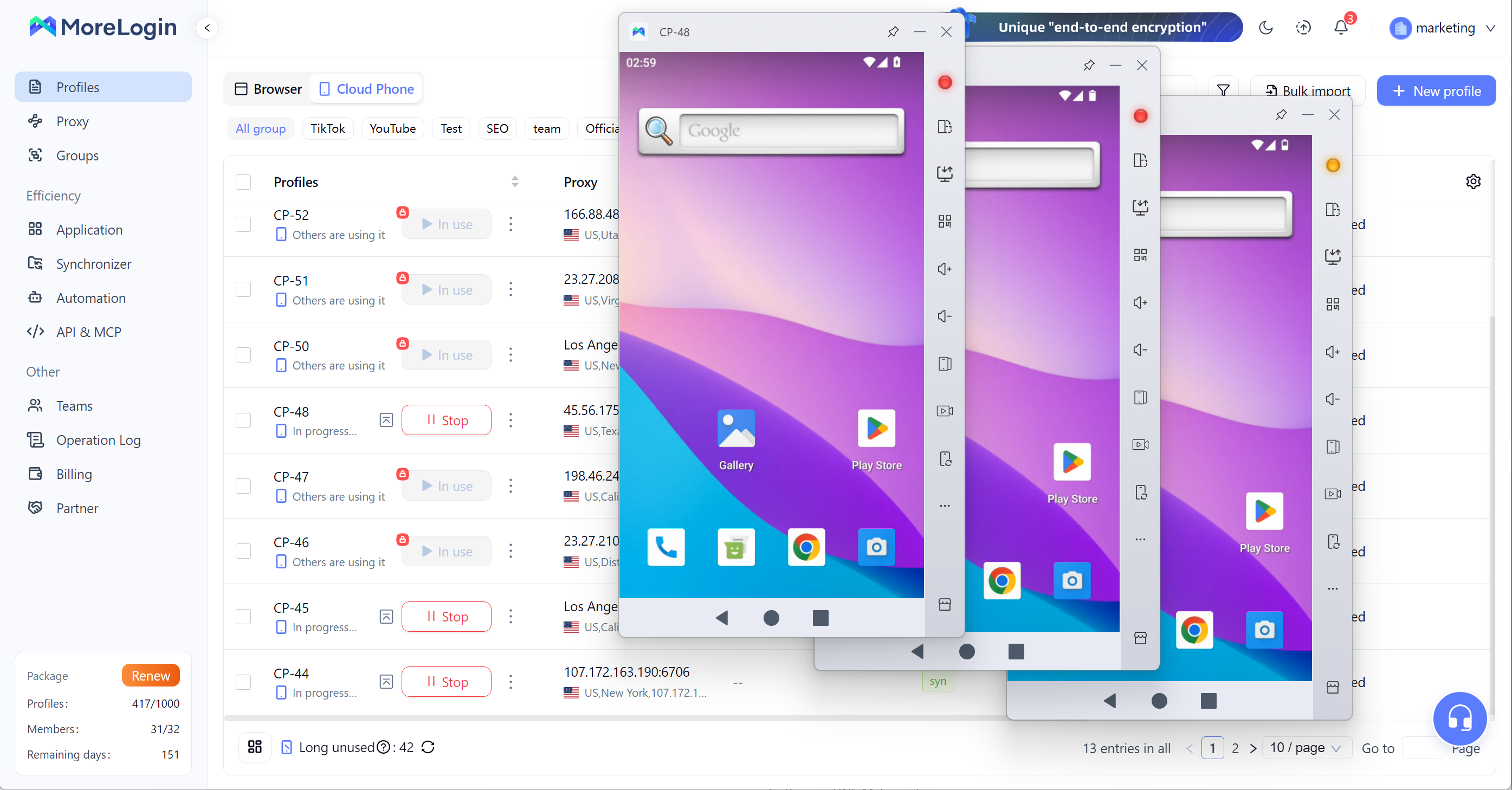
DuoPlus Cloud Phone vs Hidemium vs VMOS: 2026 Comparison - Environment Type: Cloud Phones vs Browser Profiles vs Virtual Android.
The most significant difference is the environment each tool provides.
| Criteria | DuoPlus Cloud Phone | Hidemium | VMOS |
|---|---|---|---|
| Environment type | Real ARM-based Android 15 cloud phones | Isolated browser profiles | Virtual Android devices on cloud servers |
| Mobile app support | Full Android app environment | Browser-only | Full Android app environment |
| Device fingerprint | Unique per phone | Unique per browser profile | Managed per virtual device |
| SIM data and proxy IP | Dedicated per phone | Optional proxy per profile | Global proxy network integration |
Hidemium operates at the browser layer, which is sufficient for web-based platforms but cannot run native mobile apps. DuoPlus and VMOS both provide Android environments, but DuoPlus positions its offering around real ARM-based hardware virtualization with dedicated SIM data, which matters for apps that verify device-level signals.
Anti-Detection Approach
All three tools aim to prevent account bans, but their methods differ.
Hidemium: Fingerprint Spoofing at the Browser Level
Hidemium's strength lies in granular browser fingerprint control. It spoofs WebGL, WebRTC, fonts, canvas, and other browser signals, making each profile appear as a separate real user. This approach is effective for platforms that primarily inspect browser fingerprints, such as Facebook, Google, and most e-commerce marketplaces accessed via web.
DuoPlus Cloud Phone: Device-Level Isolation
DuoPlus takes a different route: instead of spoofing a browser, it provides an entirely independent Android environment. Each cloud phone has its own device fingerprint, GPS location, SIM data, and proxy IP. This makes every account appear to run on a separate physical device, which is especially relevant for mobile-first platforms like TikTok, Instagram, and Tinder that collect device-level telemetry.
VMOS: Virtual Android with Proxy Integration
VMOS combines Android virtualization with global proxy networks. The platform manages multiple Android instances from the cloud and integrates proxy access for global reach. Its privacy stance—collecting only non-personal technical data—appeals to teams concerned about operational security.
Automation Capabilities
Automation reduces manual repetition across dozens or hundreds of accounts.
Hidemium AI Node: No-Code Browser Automation
Hidemium's AI Node lets users issue natural language commands to automate browser tasks. The drag-and-drop interface mimics real user behavior, which helps with routine actions like logging in, filling forms, or posting content across profiles.
DuoPlus DUO+ AI Agent: No-Code App Automation
DuoPlus integrates a DUO+ AI Agent that automates app interactions through natural language commands. Users can automate posting, commenting, or following within Android apps, eliminating manual repetition across cloud phones. This is a meaningful advantage for app-centric workflows where browser automation tools cannot operate.
VMOS: AI-Powered Customer Service
VMOS includes AI-powered customer service as part of its product matrix, though its automation focus is less centered on account actions and more on operational support.
Scalability and Team Collaboration
Scaling multi-account operations requires infrastructure that grows without breaking.
DuoPlus Cloud Phone: Unlimited Multi-Instance Support
DuoPlus supports unlimited multi-instance scaling—users can purchase and control as many cloud phones as needed. The unified dashboard centralizes account operations and supports team sharing, so multiple operators can manage different accounts from any browser or device. One-click reskin refreshes all device parameters for fast account rotation.
Hidemium: Bulk Profile Creation and Campaign Management
Hidemium offers bulk profile creation, campaign management, and team collaboration features. Its free plan lowers the barrier to entry, and frequent updates suggest active development. However, browser profiles consume local resources differently than cloud-hosted phones, which can affect scaling on limited hardware.
VMOS: Cloud Device Management for Teams
VMOS positions itself as a comprehensive tool for scaling online operations, with cloud device management and multi-account operations for cross-border teams. Its Hong Kong headquarters and global proxy network support international workflows.
Pricing and Accessibility
Pricing models influence which tool fits a given budget.
- Hidemium offers a free plan, making it the most accessible starting point for individuals and small teams testing multi-account workflows.
- VMOS and DuoPlus Cloud Phone operate on cloud infrastructure pricing, where costs scale with the number of devices or instances. DuoPlus's pay-per-cloud-phone model suits teams that need predictable per-account costs.
Use Case Scenarios
Scenario 1: TikTok Matrix Marketing
A marketer running 30 TikTok accounts needs real Android environments because TikTok collects device-level signals. DuoPlus Cloud Phone provides independent Android 15 devices with unique fingerprints, GPS, SIM data, and IPs—each account looks like a separate local user. Hidemium cannot run the TikTok mobile app natively, limiting its usefulness here. VMOS can run Android instances but may require additional proxy configuration.
Scenario 2: Facebook Ad Account Management via Browser
An affiliate managing 50 Facebook ad accounts primarily works in a browser. Hidemium's isolated profiles with fingerprint spoofing and proxy integration handle this efficiently at a lower cost than cloud phones. DuoPlus works too, but its device-level isolation is more than browser-only workflows require.
Scenario 3: Cross-Border E-Commerce with Mobile Storefronts
An e-commerce operator managing Shopee, Lazada, and TikTok Shop accounts across Southeast Asia needs mobile app access plus regional IPs. DuoPlus Cloud Phone's dedicated SIM data and globally simulated GPS support regional account authenticity. VMOS offers an alternative with global proxy networks and cloud device management.
Strengths and Limitations Summary
Hidemium Strengths
- Free plan available for low-cost entry
- Granular browser fingerprint spoofing
- No-code AI Node automation
- Bulk profile creation and cookie management
- Rated 4.9/5 with frequent updates
Hidemium Limitations
- Browser-only; cannot run native mobile apps
- Local resource consumption may limit scaling on single machines
- No device-level signals like SIM data or GPS simulation
VMOS Strengths
- Android virtualization with cloud device management
- Global proxy network integration
- Privacy-focused data collection policy
- Multi-account operations for cross-border teams
VMOS Limitations
- Less specialized anti-detection messaging than dedicated cloud phone platforms
- Automation focus leans toward customer service rather than account actions
DuoPlus Cloud Phone Strengths
- Real ARM-based Android 15 cloud phones
- Dedicated SIM data, proxy IP, and GPS simulation per phone
- Unlimited multi-instance scaling
- One-click reskin for fast account rotation
- DUO+ AI Agent for no-code app automation
- Unified dashboard with team sharing
DuoPlus Cloud Phone Limitations
- Cloud phone infrastructure may be more than browser-only workflows require
- No free plan mentioned; costs scale with phone count
How to Decide: A Decision Framework
Ask yourself these questions:
- Do your target platforms require native mobile apps? If yes, eliminate Hidemium and compare DuoPlus Cloud Phone with VMOS.
- Do you need device-level signals like SIM data and GPS? If yes, DuoPlus Cloud Phone's dedicated SIM and GPS simulation is the stronger fit.
- Is your workflow browser-only? If yes, Hidemium's lower cost and free plan may be the most efficient choice.
- Do you need automation inside mobile apps? If yes, DuoPlus's DUO+ AI Agent addresses this directly.
- Are you a developer needing flexible Android virtualization? VMOS's broader product matrix may suit your needs.
For deeper comparisons with other tools, see DuoPlus Cloud Phone vs AdsPower vs BlueGenie Cloud Phone and DuoPlus Cloud Phone vs GeeLark vs Kameleo.
Sources and further reading
- Global Partnerships - IPWeb Ecosystem Network - IPWeb partners with e-commerce, browsers & payment platforms. Together we build a secure proxy ecosystem to empower your global business growth.
- BestProxy Blog - Proxy Tech Insights and Industry Trends - The BestProxy Blog provides the latest insights into Proxy Technologies, Industry Trends, and Market Developments. Our Blog helps you stay informed about the newest proxy innovations and offers practical tips and case studies on how to maximize the use of proxies.
- Our partners | SX.ORG - Information about our partners
Frequently Asked Questions
Is DuoPlus Cloud Phone better than Hidemium?
They serve different purposes. DuoPlus Cloud Phone provides real Android 15 cloud phones with device-level isolation, making it stronger for mobile app platforms like TikTok and Instagram. Hidemium is an anti-detect browser optimized for web-based multi-account management at a lower cost. The better tool depends on whether your workflow is app-based or browser-based.
Can VMOS replace DuoPlus Cloud Phone?
VMOS offers Android virtualization and cloud device management, so it overlaps with DuoPlus in some use cases. However, DuoPlus differentiates with dedicated SIM data, GPS simulation, one-click reskin, and the DUO+ AI Agent for app automation. Teams needing those specific features may find DuoPlus more complete.
Does Hidemium support mobile apps?
No. Hidemium operates at the browser layer and cannot run native Android or iOS apps. For mobile app account management, cloud phone platforms like DuoPlus Cloud Phone or Android virtualization tools like VMOS are required.
Which tool is best for TikTok multi-account management?
DuoPlus Cloud Phone is purpose-built for TikTok matrix marketing. Its Android 15 cloud phones with unique fingerprints, GPS, SIM data, and IPs make each account appear to run on a separate device, which aligns with TikTok's device-level detection. Hidemium cannot run the TikTok mobile app, and VMOS may require additional configuration.
Is there a free option among these three?
Hidemium offers a free plan, making it the most accessible for testing anti-detect browser workflows. DuoPlus Cloud Phone and VMOS operate on paid cloud infrastructure models.
Conclusion
DuoPlus Cloud Phone, Hidemium, and VMOS each solve multi-account management from a different angle. Hidemium excels as a cost-effective anti-detect browser for web-based account operations. VMOS provides flexible Android virtualization with global proxy integration for teams and developers. DuoPlus Cloud Phone stands out when the workflow demands real Android 15 cloud phones with device-level isolation, dedicated SIM data, GPS simulation, and app-level automation—capabilities that browser-based tools cannot replicate. Match the tool to your platform requirements, and the decision becomes straightforward.
For further reading, explore DuoPlus Cloud Phone vs Hidemium vs VMOS Cloud and DuoPlus Cloud Phone vs VMOS Cloud vs BlueGenie Cloud Phone.