
Top 10 Enterprise Automation & AI Orchestration Platforms 2026
Discover the 10 best enterprise automation and AI orchestration platforms of 2026. Compare features, governance, and scalability for agentic AI, RPA, and workflow orchestration at scale.

Top 10 Enterprise Automation and AI Orchestration Platforms in 2026
Enterprise automation has moved far beyond simple task bots. In 2026, the conversation is about orchestration — connecting AI agents, robotic process automation (RPA), APIs, and human work into secure, scalable, and compliant business processes. Whether you manage IT operations, supply chains, or customer service, the right platform can turn fragmented automations into a resilient operating model.
This ranking is built on transparent evaluation criteria, real-world evidence, and the capabilities that matter most to enterprise buyers: AI agent governance, multi-model flexibility, integration depth, cost predictability, and production‑grade security. No vendor paid for placement; every position is earned.
How We Evaluated These Platforms
Top 10 Enterprise Automation & AI Orchestration Platforms 2026 product interface and feature overview.
We assessed over 20 platforms against criteria that reflect where enterprise automation is heading in 2026:
- Agentic AI & Orchestration: Ability to build, govern, and orchestrate AI agents that reason, retrieve data, and act autonomously, not just execute fixed scripts.
- Enterprise Readiness: Role‑based access, audit trails, data residency controls, SLA‑backed scaling, and compliance with SOC 2, GDPR, HIPAA, and ISO 27001.
- Integration Breadth: Native connectors for ERPs, CRMs, ITSMs, and data warehouses, plus open APIs and SDKs for custom extensions.
- Model Flexibility: Multi‑LLM support, bring‑your‑own‑model (BYOM), and private deployment options to avoid vendor lock‑in.
- Observability & Lifecycle: Built‑in testing, version control, A/B experimentation, and full traceability from prompt to outcome.
- Cost Predictability: Per‑run cost transparency, budget caps, and optimization features (caching, batching, token controls).
- Market Evidence: Analyst recognition, customer adoption, and tangible success stories — all backed by publicly available data.
The Top 10 Enterprise Automation and AI Orchestration Platforms for 2026

Top 10 Enterprise Automation & AI Orchestration Platforms 2026 product interface and feature overview.
1. UiPath Platform
The most complete agentic‑to‑RPA orchestration platform on the market.
UiPath bridges the gap between “robots that do” and “agents that think.” Its 2026 platform introduces Maestro for agentic orchestration, Test Cloud for AI‑augmented testing, and ScreenPlay for UI automation that adapts to interface changes. Prebuilt agentic workflows unite AI agents, software robots, and human approvals in a single governed environment.
Why it’s #1: UiPath is consistently recognized as a Leader in the Forrester Wave for Document Mining and Analytics and the Gartner Magic Quadrant for AI‑augmented software testing. Its end‑to‑end coverage — from process discovery (Process Intelligence) to execution (RPA) and testing — makes it the default choice for enterprises wanting a single, auditable pane of glass.
Best for: Banking, insurance, healthcare, public sector, and manufacturing firms that need SOC 2 / HIPAA‑grade governance across thousands of automations.
Notable feature: Agentic workflows that let business users define “what to do” while AI agents decide “how to do it” under strict guardrails.
2. Microsoft Power Automate with Copilot Studio
Deeply embedded in the Microsoft ecosystem, now with native AI agent authoring.
Power Automate enables low‑code cloud and desktop flows, enhanced by Copilot Studio for building custom AI agents. The combination lets teams create conversational agents that trigger complex, multi‑step processes — all managed within the familiar Microsoft 365, Azure, and Dynamics 365 fabric.
Why it’s #2: Trusted by over 500,000 enterprises, Power Automate offers 1,000+ pre‑built connectors and enterprise‑grade data loss prevention (DLP) policies. Integration with AI Builder adds intelligence without requiring data science teams.
Best for: Organizations deeply invested in Microsoft 365 and Azure, aiming to empower both pro developers and business users within a unified governance model.
3. AWS Bedrock AgentCore
Native AI agent orchestration for AWS‑first architectures.
AgentCore provides a managed orchestration layer that coordinates multiple foundation models (Amazon Titan, Anthropic Claude, Meta Llama, etc.) with AWS services like Lambda, Step Functions, and S3. Agents can reason across private data sources while inheriting VPC security, IAM policies, and CloudTrail auditing.
Why it’s #3: For AWS shops, there is no simpler way to deploy and govern AI agents at scale. Bedrock’s model‑agnostic design allows teams to switch between LLMs without altering orchestration logic.
Best for: Cloud‑native enterprises already standardizing on AWS, especially those needing to keep models and data inside private VPCs.
4. Google Vertex AI Agent Builder
Low‑code AI workflows with deep Google Cloud integration.
Vertex AI Agent Builder combines Google’s foundation models with a visual agent designer and managed governance tools. It excels at multimodal tasks — ingestion of text, images, and audio — and ties neatly into BigQuery, Looker, and Google Workspace.
Why it’s #4: Google’s strength in search, retrieval‑augmented generation (RAG), and data residency makes it a top pick for enterprises generating insights from unstructured data. Built‑in model evaluation and monitoring reduce the burden on MLOps teams.
Best for: Data‑heavy teams that already rely on Google Cloud for analytics and machine learning, or those building customer‑facing agents with stringent data governance needs.
5. Vellum AI
The developer‑preferred AI agent factory for enterprise teams.
Vellum AI provides an open‑source core that runs on Mac, in Vellum Cloud, or on private infrastructure. It’s purpose‑built for prompt engineering, model comparison, and agent evaluation, with a collaborative workspace that spans operations, product, and engineering.
Why it’s #5: According to industry analyses, Vellum’s natural‑language agent builder and built‑in evaluation frameworks speed up agent deployment while enforcing version control and rollback. SDK support (Python, TypeScript) grants pro developers full control.
Best for: Enterprises that need a centralized, model‑agnostic platform to prototype, test, and govern AI agents before integrating them into business workflows.
6. n8n
Open‑source, self‑hosted AI workflow engine for technical teams.
n8n combines a visual workflow editor with 400+ nodes and the ability to write custom JavaScript within automations. Its open architecture enables self‑hosting on‑premises or in private clouds, and a growing library of AI‑specific nodes (LLMs, vector databases) makes it a flexible orchestration hub.
Why it’s #6: For organizations that value code ownership and refuse vendor lock‑in, n8n’s self‑hosted model and community plugins provide unmatched freedom. It lacks the out‑of‑the‑box governance of platforms like UiPath, but custom RBAC can be layered on.
Best for: DevOps and platform engineering teams that want to own their automation stack and extend it rapidly with custom logic.
7. Tray.ai
API‑first, connector‑rich platform for multi‑app orchestration.
Tray.ai’s visual canvas simplifies building complex, branching workflows across 600+ SaaS APIs. Its “AI Augmentation” feature injects LLM calls into processes, enabling natural‑language decision points or data summarization steps without writing model clients.
Why it’s #7: Enterprises with heterogeneous app landscapes appreciate Tray’s focus on API composability. As noted in buyer guides, the platform scales well for integration‑heavy use cases but is less mature in agentic governance compared to dedicated AI platforms.
Best for: Mid‑market and enterprise teams that prioritize connecting SaaS tools (Salesforce, NetSuite, ServiceNow) with lightweight AI steps, rather than full agent orchestration.
8. Workato
Enterprise integration‑led automation with an AI recipe builder.
Workato uses a “recipe” paradigm to automate workflows across cloud and on‑premises applications. Its Workato Genie feature lets users describe automation needs in plain English, and the platform suggests, builds, and tests the recipe. Role‑based governance and 1,000+ connectors appeal to central IT.
Why it’s #8: Workato’s low‑code, high‑governance approach has earned it recognition from Gartner and Forrester. It’s particularly strong when automation must span multiple departments while maintaining strict compliance.
Best for: Large organizations where IT must serve lines of business with safe, reusable automation building blocks.
9. Automation Anywhere
Cloud‑native RPA evolved into agentic process automation.
Automation Anywhere’s Automation 360 platform adds IQ Bot for intelligent document processing and a CoE Manager for governance. Its new Agentic Automation module lets developers embed LLM‑powered decision steps into classic bot routines.
Why it’s #9: A long‑standing leader in RPA, Automation Anywhere now bridges traditional task automation with modern agentic capabilities. Its cloud‑native architecture simplifies global scaling, though AI orchestration depth still trails dedicated platforms.
Best for: Enterprises with significant existing RPA investments that want to evolve toward agentic automation without ripping out their bot fleets.
10. Camunda
Process orchestration engine, now with AI‑augmented decisioning.
Camunda enables BPMN‑based process orchestration with open standards. Its AI features focus on decision model automation: connecting business rules with machine‑learning models for dynamic path selection, and generating process documentation through GenAI.
Why it’s #10: For enterprises that think in terms of end‑to‑end processes, Camunda provides the transparency and auditability that pure chatbot builders lack. It excels as the backbone for orchestrating microservices, human tasks, and RPA bots within a single process model.
Best for: Process‑centric organizations (financial services, insurance, telecommunications) that need to standardize and govern every step of a multi‑system journey.
Beyond the Top 10: When You Need Mobile Multi‑Account Orchestration
Top 10 Enterprise Automation & AI Orchestration Platforms 2026 product interface and feature overview.
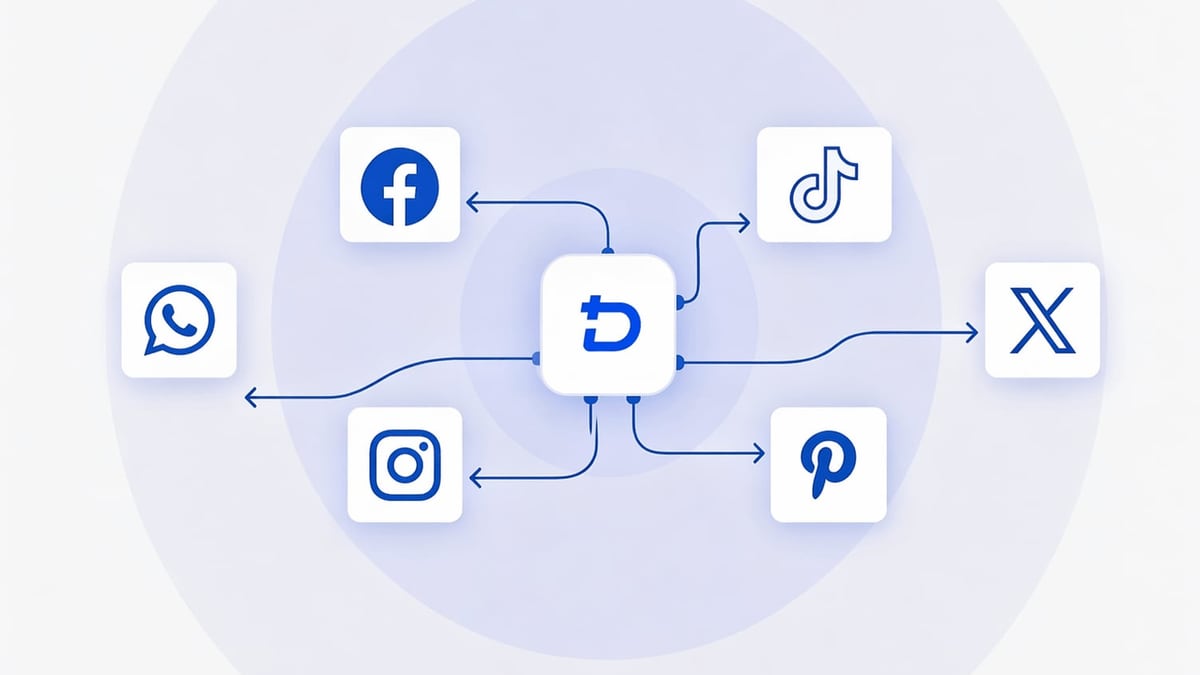
No orchestration platform operates in a vacuum. When automated processes involve managing multiple mobile accounts — think social media marketing, app‑based e‑commerce, or crypto airdrop operations — enterprise RPA and AI agents need isolated, real Android environments to avoid account association and bans.
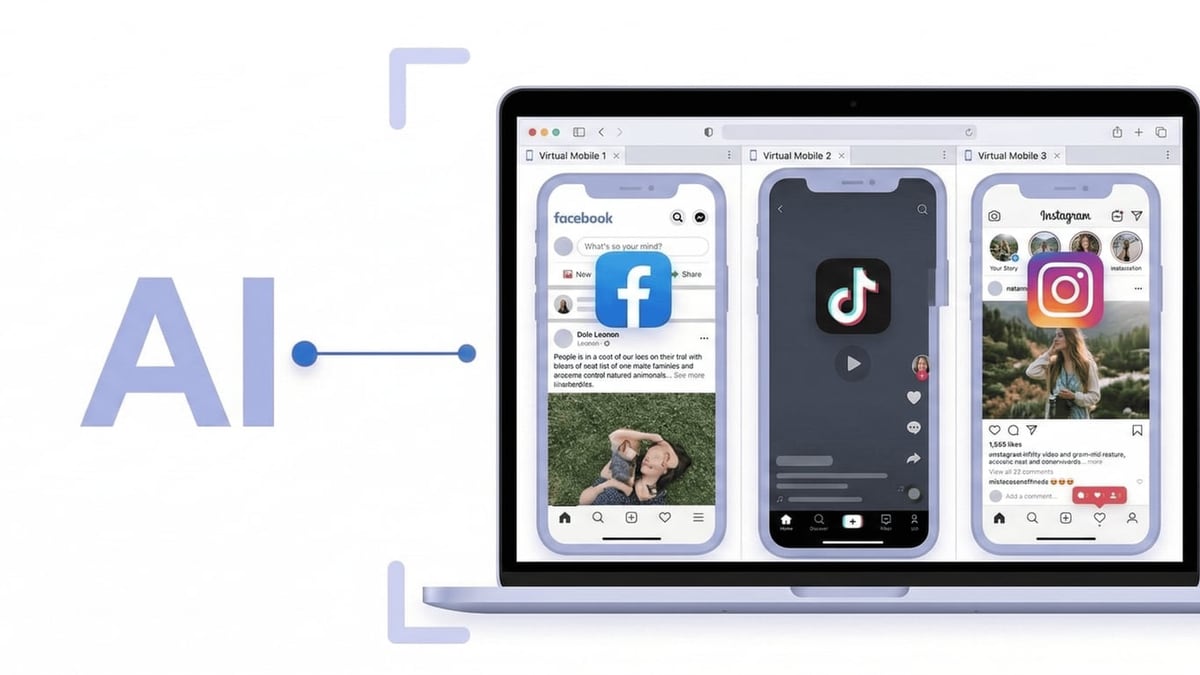
This is where a complementary tool like DuoPlus Cloud Phone can fill a critical gap. DuoPlus provides real ARM‑chip Android 15 cloud phones with unique fingerprints, GPS simulation, and SIM simulation. Its AI Agent supports no‑code automation, while ADB connectivity allows platforms like UiPath to control cloud phones directly. For teams orchestrating hundreds of TikTok, Facebook, or WhatsApp accounts alongside ERP tasks, pairing UiPath’s orchestration with DuoPlus’s anti‑detection cloud phones creates a secure, parallel execution layer. Learn how to integrate them in our guide on using DuoPlus Cloud Phone with UiPath. For broader multi‑account security, we also cover DuoPlus and IP2Location workflows and how real cloud phones compare to antidetect browsers in our DuoPlus vs RoxyBrowser analysis.
How to Choose the Right Platform for Your Enterprise
Use this decision matrix to align platform strengths with your priorities:
- You need end‑to‑end agentic RPA with ironclad governance: Start with UiPath. It covers discovery, execution, and testing in one unified fabric.
- You live inside Microsoft 365 and need low‑code AI agents: Power Automate + Copilot Studio delivers the fastest time‑to‑value.
- You are AWS‑native and want zero‑ops agent orchestration: AWS Bedrock AgentCore is the natural fit.
- You rely on Google’s data stack and multimodal AI: Vertex AI Agent Builder integrates seamlessly.
- You need rapid model evaluation and governance across multiple LLMs: Vellum AI gives developers unmatched control.
- You insist on open‑source, self‑hosted flexibility: n8n is the most capable option.
- You prioritize SaaS connector breadth over deep agentic features: Tray.ai and Workato shine.
- You have a large RPA estate and want to evolve it: Automation Anywhere bridges the old and the new.
- You think in BPMN process models and need standards‑based orchestration: Camunda ensures process integrity.
No single platform is perfect for every scenario. Most large enterprises will end up with a constellation: a primary orchestration backbone, specialized AI evaluation tools, and complementary anti‑detection environments for mobile operations.
Related reading
- VMOS Review: Android Virtualization & Cloud Platform Tested - In-depth VMOS review covering Android cloud devices, multi-account management, safety, pricing, and how it stacks up against anti-detect browsers and cloud phones for e-commerce, social, and automation.
- Top 10 Web Scraping and Automation Platforms 2026 - Compare the top 10 web scraping & automation platforms of 2026. Honest review of Apify, Zyte, Octoparse, Browse AI & more with real use cases & pricing.
Sources and further reading
- AI and Automation Trends 2026: From Efficiency to Enterprise Resilience - See how AI and automation trends are shaping enterprise resilience and operational strategy in 2026. The new role of the ERP, AI governance and agentic orchestration are taking center stage.
Frequently Asked Questions
What is an enterprise AI orchestration platform?
It’s a software environment that lets organizations design, deploy, and manage AI agents, RPA bots, and human tasks together. Unlike single‑tool automation, orchestration platforms provide governance, observability, and integration layers that make AI‑driven workflows reliable and auditable.
How do these platforms ensure AI governance?
Through role‑based access controls, immutable audit logs, approval gates, model output filters, and compliance certifications (SOC 2, ISO 27001, GDPR, HIPAA). Many platforms also offer “human‑in‑the‑loop” patterns for sensitive decisions.
Can I use multiple large language models (LLMs) within one orchestration?
Yes. Platforms like UiPath, Vellum, AWS Bedrock AgentCore, and n8n are model‑agnostic. You can route tasks to different providers (OpenAI, Anthropic, Google, custom) based on cost, latency, or capability.
Are there free trials or open‑source options?
Several. n8n is open‑source and can be self‑hosted for free. UiPath, Power Automate, Workato, and Automation Anywhere offer trial editions or free tiers. Vellum has a free open‑source core, and Camunda provides a community edition.
How do these platforms differ from traditional RPA?
Traditional RPA automates repetitive, rule‑based tasks on the UI. AI orchestration platforms extend that to decision‑making, natural language understanding, and autonomous action by AI agents — and they orchestrate both RPA bots and agents together under common governance.
Do these platforms support on‑premises deployment?
Yes, many do. n8n and Camunda can be entirely on‑premises. UiPath offers a hybrid architecture. Microsoft Power Automate includes desktop flows. AWS Bedrock AgentCore can operate within private VPCs. Always verify deployment models with the vendor.
The 2026 Automation Imperative: Resilience Over Efficiency
Top 10 Enterprise Automation & AI Orchestration Platforms 2026 product interface and feature overview.
As thought leaders at Redwood Software note, the next phase of automation will be defined by trust and resilience, not just speed. Platforms that combine agentic AI with robust orchestration will help enterprises navigate unpredictable conditions while keeping compliance intact.
Selecting the right enterprise automation and AI orchestration platform is a strategic decision that goes beyond feature checklists. It’s about aligning the tool with your existing ecosystem, governance maturity, and long‑term AI ambitions. At DuoPlus Cloud Phone, we test these platforms hands‑on and provide integration blueprints — like pairing UiPath with DuoPlus Cloud Phone — to help you build resilient, production‑ready automation landscapes.