
DuoPlus Cloud Phone vs VMOS: Real ARM vs Virtualized Android
Compare DuoPlus Cloud Phone and VMOS for global multi-account operations: real ARM devices vs virtualized Android, anti-detect depth, pricing, and use cases.
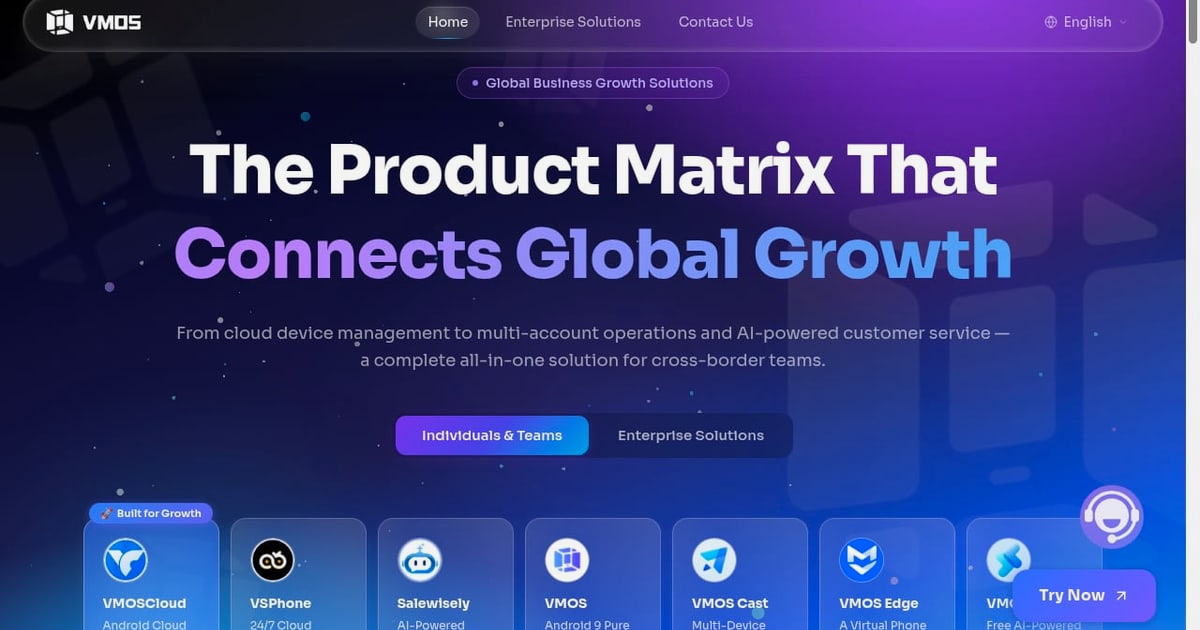
DuoPlus Cloud Phone vs VMOS: Real ARM vs Virtualized Android for Global Growth
When you need to run many mobile accounts without a shelf of physical phones, two names often come up: DuoPlus Cloud Phone and VMOS. Both let you operate Android environments remotely, but they are built on different foundations and suit different jobs. This comparison breaks down how they differ in device realism, anti-detect depth, scale, pricing, and day-to-day workflow so you can choose the right tool for your operation.
What each product actually is
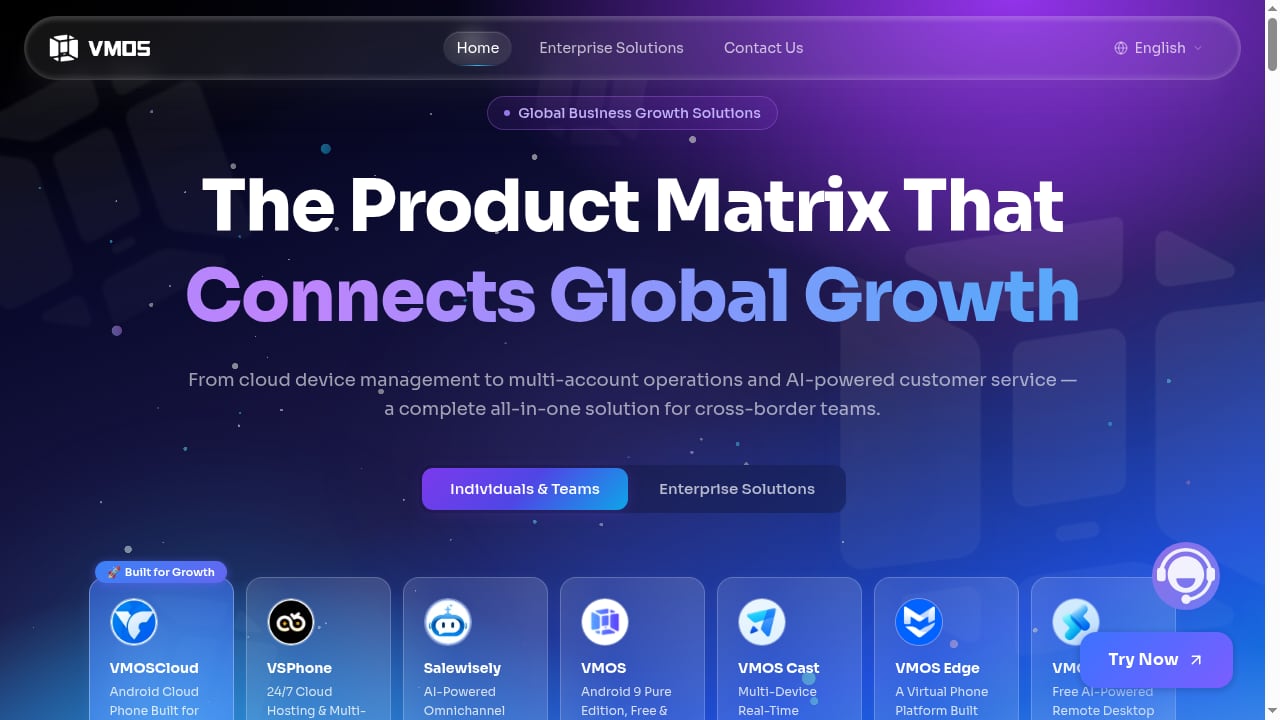
First viewport screenshot of www.vmos.com.
DuoPlus Cloud Phone
DuoPlus Cloud Phone is a cloud-based Android phone service that provides isolated, anti-detect mobile environments for managing multiple online accounts. It deploys real ARM mobile devices globally, each with unique device fingerprints, GPS, SIM card, and base station data, to simulate local operational environments. The platform is designed for social media marketers, e-commerce sellers, affiliate marketers, ad account managers, game farmers, live streamers, and mobile app testers who need to operate many accounts without triggering association risks. Key features include unlimited device multiplicity, multi-platform control via PC and mobile browsers, bulk app installation and management, one-click reskin to change device environments, one-click sharing for team collaboration, and support for Android 15. DuoPlus positions itself as the world's first anti-detect cloud phone and the first Android 15 cloud phone, emphasizing technical excellence, unmatched simulations, and cost efficiency compared to physical devices.
VMOS
VMOS is an Android virtualization and cloud device management platform. Its cloud offering provides virtualized Android environments hosted on remote servers, with a focus on multi-account operations and AI-powered customer service for cross-border teams. VMOS is often described as a complete all-in-one solution for teams that need cloud device management alongside account operations.
In short: DuoPlus runs on real ARM hardware with per-device fingerprint simulation, while VMOS runs Android in a virtualized layer. That architectural difference drives most of the practical trade-offs below.
Head-to-head comparison
| Dimension | DuoPlus Cloud Phone | VMOS |
|---|---|---|
| Device foundation | Real ARM mobile devices deployed globally | Virtualized Android environments on cloud servers |
| Fingerprint depth | Unique device fingerprint, GPS, SIM card, and base station data per device | Virtualized device parameters; depth varies by plan |
| Anti-detect positioning | Purpose-built anti-detect cloud phone | General virtualization and device management |
| Android version | Supports Android 15 | Android support varies by product line |
| Scale | Unlimited device multiplicity | Multiple instances supported |
| Management | PC and mobile browser control, bulk app install, one-click reskin, one-click sharing | Cloud device management dashboard |
| Collaboration | One-click sharing for team workflows | Team-oriented management features |
| Pricing model | Free trial; monthly and annual plans with volume discounts; startup time packages billed by minute; monthly startup plans | Subscription tiers; check current plans for device and usage limits |
| Best fit | Social media marketers, e-commerce sellers, affiliate marketers, ad account managers, game farmers, live streamers, app testers | Cross-border teams needing cloud device management and AI customer service |
Where DuoPlus Cloud Phone stands out
First viewport screenshot of www.vmos.com.
Real ARM devices, not emulated shells
DuoPlus runs on actual ARM mobile hardware hosted in the cloud. Each device carries its own fingerprint, GPS, SIM, and base station data, which makes the environment behave like a local phone rather than a software emulator. For platforms that scrutinize device signals, that realism matters. As one industry review notes, cloud phone providers either host real mobile devices or put Android OS on ARM hardware, and real ARM setups generally produce more authentic device behavior than emulated alternatives source.
Deeper anti-detect isolation
Because DuoPlus was built as an anti-detect cloud phone first, isolation is the default rather than an add-on. Each device is a separate environment with its own identifiers, so accounts do not share device-level signals. That reduces association risk when you run multiple Facebook or TikTok ad accounts, TikTok Shop stores, or affiliate campaigns in parallel. VMOS, by contrast, is positioned more broadly as a virtualization and device management platform, so anti-detect depth depends on how you configure it.
Android 15 support
DuoPlus supports Android 15, which helps when apps require newer OS versions or when you want your fleet to look current. Older Android versions can be a signal that something is off, especially for apps that check OS version during onboarding.
Browser-based control and team sharing
You can manage DuoPlus from PC and mobile browsers, install apps in bulk, reskin a device environment with one click, and share devices with teammates in one click. For agencies and teams, that removes the friction of passing around credentials or rebuilding environments.
Flexible pricing for bursty workloads
DuoPlus offers a free trial, monthly and annual plans with volume discounts, startup time packages billed by minute, and monthly startup plans. That mix suits operations that need many devices briefly (for example, campaign launches or app testing) as well as teams that keep a steady fleet running.
Where VMOS is a reasonable choice
First viewport screenshot of www.vmos.com.
VMOS has real strengths, and it would be unfair to dismiss it. Its virtualization approach can be cost-effective for lighter workloads, and its positioning around cloud device management and AI-powered customer service appeals to cross-border teams that want an all-in-one tool. If your main need is running a handful of Android environments for testing or internal workflows, VMOS can cover that ground.
However, the trade-offs are worth stating plainly:
- Virtualized vs real hardware. VMOS environments are virtualized, so device signals may not match what a real phone would send. For platforms with aggressive device fingerprinting, that can increase friction.
- Anti-detect depth. VMOS is not positioned primarily as an anti-detect cloud phone. Teams that need per-device GPS, SIM, and base station simulation should verify exactly what each VMOS plan provides.
- Scale and collaboration. VMOS supports multiple instances and team features, but DuoPlus's one-click sharing and bulk app management are built specifically for high-volume multi-account operations.
- Android version. DuoPlus advertises Android 15 support; VMOS's Android version depends on the product line, so check before committing.
Practical examples: which tool fits which job
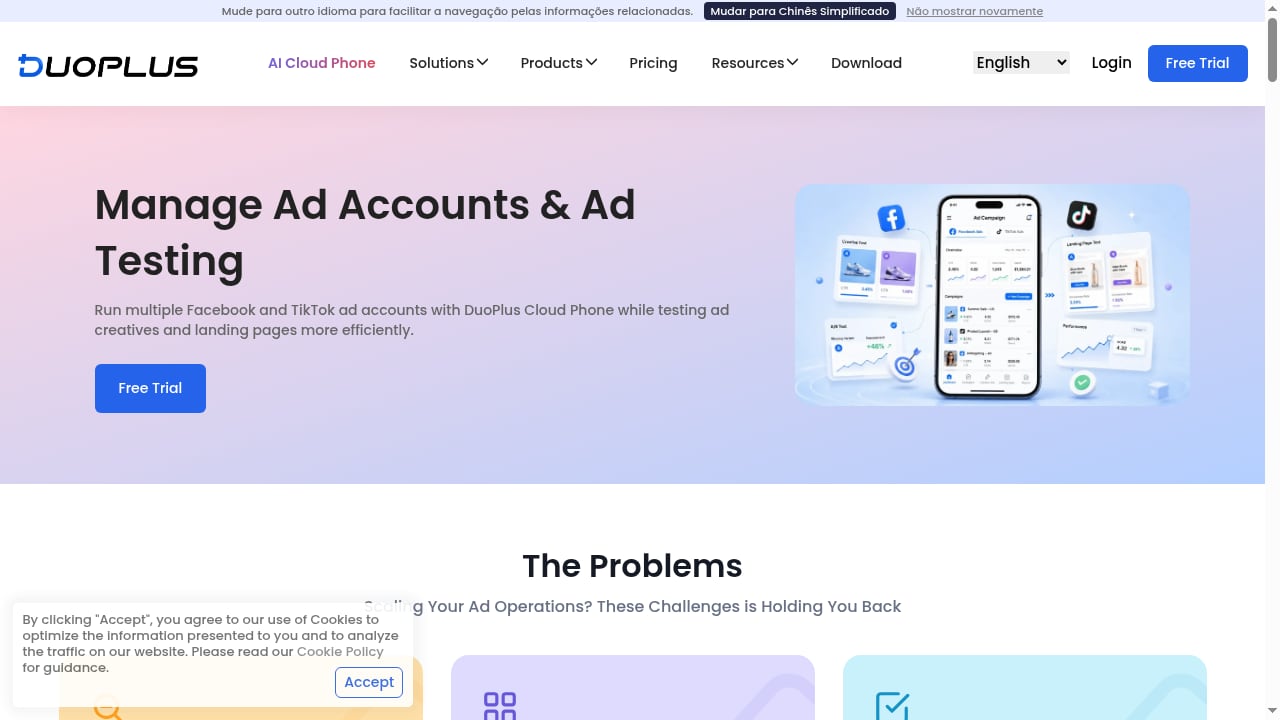
First viewport screenshot of www.duoplus.net.
Scenario 1: Managing 30 Facebook ad accounts
You need each account to look like it belongs to a different person in a different location. DuoPlus gives each device its own fingerprint, GPS, SIM, and base station data, so accounts do not share device-level signals. VMOS can run multiple virtual environments, but you would need to verify how much of that device-level detail each plan simulates. For ad account managers, DuoPlus is the more direct fit.
Scenario 2: TikTok Shop and Shopee multi-store operations
E-commerce sellers running stores across TikTok Shop, Shopee, and Lazada need isolated mobile environments that look local. DuoPlus's real ARM devices and per-device GPS help simulate local operation. Pairing each device with a clean proxy is still essential; see our guide on how to use DuoPlus Cloud Phone with proxies for the full workflow.
Scenario 3: 24/7 AFK gaming or live streaming
Game farmers and live streamers need devices that stay online and behave like real phones. DuoPlus's real ARM foundation and browser-based control support always-on operations. VMOS can host persistent environments, but virtualization may introduce performance or compatibility quirks with graphics-heavy games.
Scenario 4: App testing and localization
Mobile app testers need to check how an app behaves across regions and Android versions. DuoPlus's Android 15 support and global device deployment make it useful for localization testing. VMOS is also used for app testing, and its virtualization model can be convenient for quick checks. For a broader look at testing tools, see our Top 10 Cloud Phone & Android Emulator Software 2026.
Scenario 5: Small team needing cloud device management plus AI support
If your priority is a single dashboard for device management and AI-powered customer service, VMOS's all-in-one positioning may appeal. But if your priority is anti-detect isolation for many accounts, DuoPlus is the more specialized tool.
Pricing and value considerations
DuoPlus's pricing is usage-based with a free trial, monthly and annual plans with volume discounts, startup time packages billed by minute, and monthly startup plans. That structure rewards teams that plan their device usage and can scale down when campaigns end. VMOS uses subscription tiers; the right comparison depends on how many devices you need and how long they run. Always model your actual usage: device count × hours per day × days per month, then compare against each provider's current plan.
One point from independent testing worth noting: cloud phone services generally require you to bring your own proxies, and proxy quality directly affects anti-detect safety source. Budget for proxies regardless of which platform you choose.
Decision guide: which should you pick?
Choose DuoPlus Cloud Phone if:
- You need real ARM devices with unique fingerprints, GPS, SIM, and base station data.
- You run many social media, e-commerce, or ad accounts and need strong isolation.
- You want Android 15 support and browser-based control.
- You need bulk app management, one-click reskin, and one-click team sharing.
- You want flexible pricing with a free trial and volume discounts.
Choose VMOS if:
- You need a general-purpose cloud device management platform.
- You want an all-in-one solution that includes AI-powered customer service.
- Your workloads are lighter and you can verify that its virtualization depth meets your anti-detect needs.
- You are testing the waters and want a lower-commitment entry point.
For a wider field, see our Top 10 Anti-Detect Browser & Cloud Phone Products 2026 and our comparison of DuoPlus Cloud Phone vs Antidetect Cloud vs Kameleo.
Related reading
- iRemotech Review 2026: Real iPhone Cloud for Mobile Ops - Evidence-based iRemotech review: real cloud iPhones for Instagram automation, QA, and device fleets. Pricing, setup, strengths, limits, and who should buy.
- How to Use DuoPlus Cloud Phone with NordVPN: Setup & Workflow - Learn how to combine DuoPlus Cloud Phone with NordVPN for isolated mobile environments and encrypted traffic, including setup steps, use cases, and troubleshooting.
Sources and further reading
- Top 8 Best Android Cloud Phones: Features and Usage - Best Android cloud phones in 2026: compare VMOS Cloud, GeeLark, Multilogin & more. Features, CyberYozh proxy setup, and use cases explained.
- Top 8 Best Cloud Phones for Facebook Multi-Accounting in 2026 - Compare the top 8 best cloud phone platforms to manage multiple Facebook accounts and see which one is ideal for your work.
FAQ
Is DuoPlus Cloud Phone the same as an Android emulator?
No. DuoPlus runs on real ARM mobile devices hosted in the cloud, not on a software emulator running on your computer. Each device has its own fingerprint, GPS, SIM, and base station data.
Can VMOS run multiple accounts at once?
VMOS supports multiple instances with independent app environments. The exact number and isolation depth depend on your plan, so check current specifications before scaling.
Does DuoPlus support Android 15?
Yes. DuoPlus supports Android 15 and positions itself as the first Android 15 cloud phone.
Do I need proxies with DuoPlus or VMOS?
In most cases, yes. Cloud phone services typically require you to add your own proxies, and proxy quality affects how well each device is isolated. See our proxy guide for setup steps.
Which is better for TikTok multi-accounting?
For large-scale TikTok multi-accounting, DuoPlus's real ARM devices and per-device fingerprint simulation are designed for that use case. VMOS can run TikTok in virtualized environments, but verify that its device simulation meets your risk tolerance.
Can I try DuoPlus before buying?
Yes. DuoPlus offers a free trial so you can test device performance and workflow before committing to a paid plan.
Conclusion
DuoPlus Cloud Phone and VMOS solve overlapping but different problems. DuoPlus is a purpose-built anti-detect cloud phone running on real ARM hardware with deep per-device simulation, Android 15 support, and team-friendly controls. VMOS is a broader virtualization and device management platform with an all-in-one angle that suits cross-border teams with lighter anti-detect needs. If your operation depends on running many mobile accounts without association risk, DuoPlus is the more specialized choice. If you need general cloud device management with AI support, VMOS may fit. Either way, pair your devices with quality proxies and test before scaling.